Learn
Pattern making, one idea at a time
Short lessons on the rules behind good patterns: why darts work, how collars sit, why hems dip. Each has its drawing and a way to try it in DrapeXD, and most have a short reel.
Pattern-making lessons
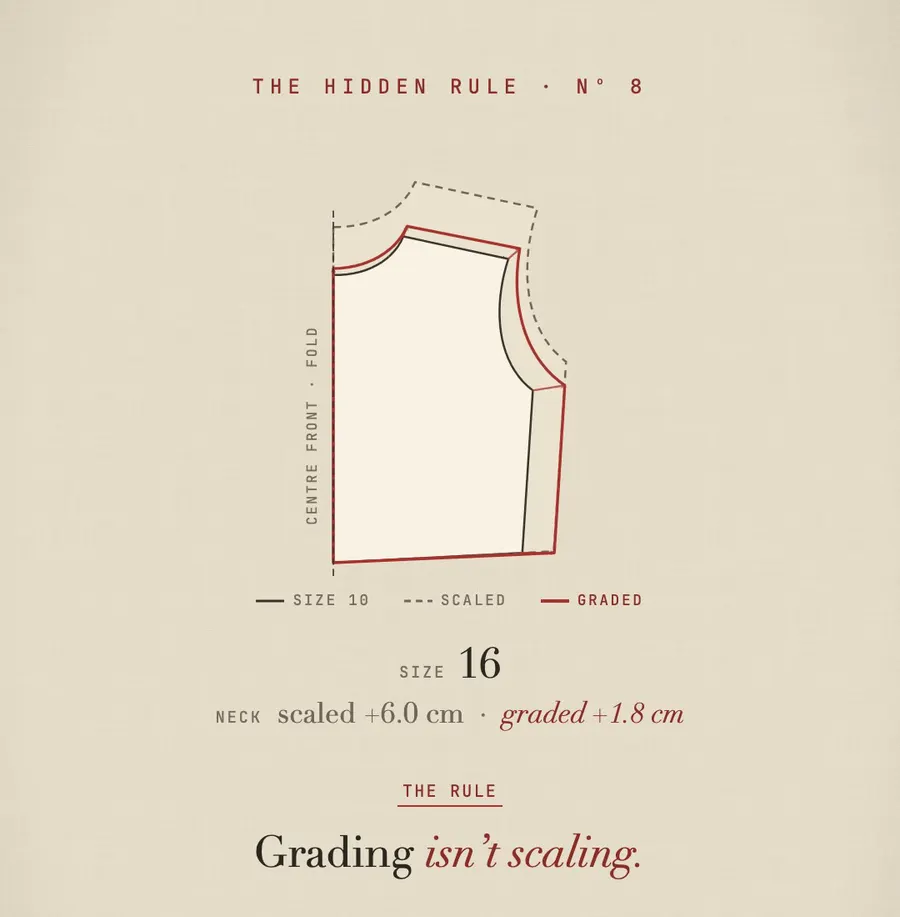
The Hidden Rule · Nº 8Grading is not scalingYou can’t make a bigger size by enlarging the pattern, because bodies don’t grow evenly. Grading moves each point of the pattern by its own amount: a lot at the bust, waist and side seam, very little at the neck and shoulder.
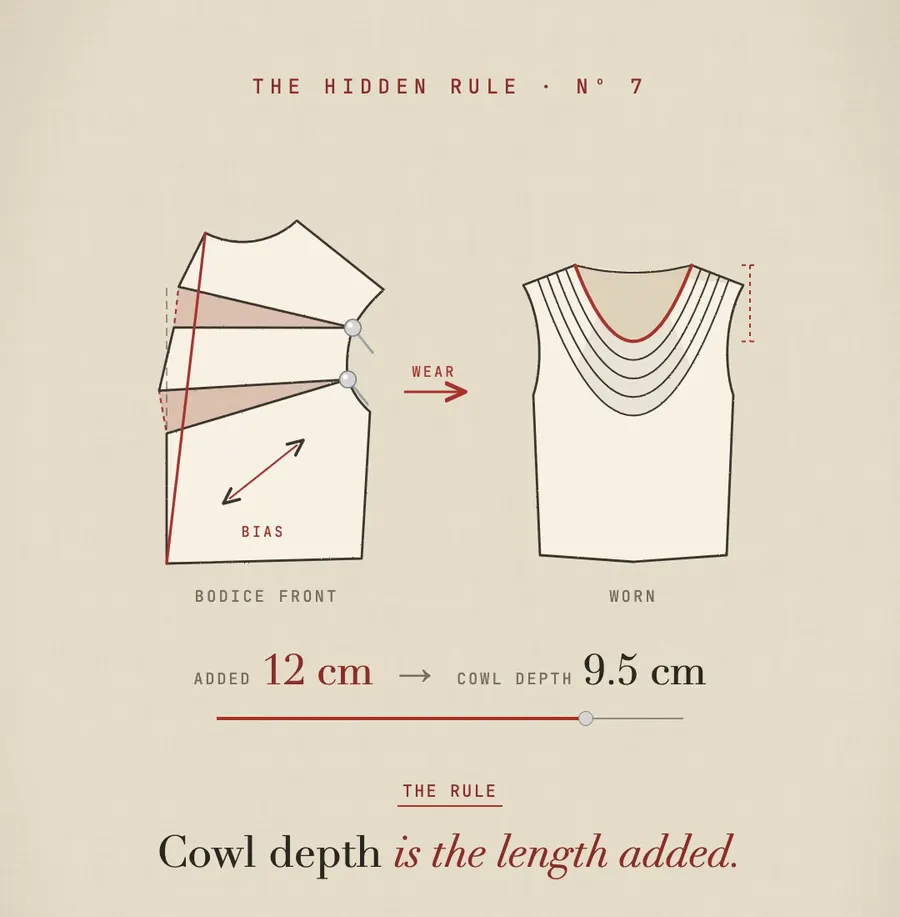
The Hidden Rule · Nº 7How a cowl neckline is madeA cowl is not a special shape. It is extra length added to the neckline, more than the body underneath needs, cut on the bias so it falls into soft folds. The more length you add, the deeper the cowl.
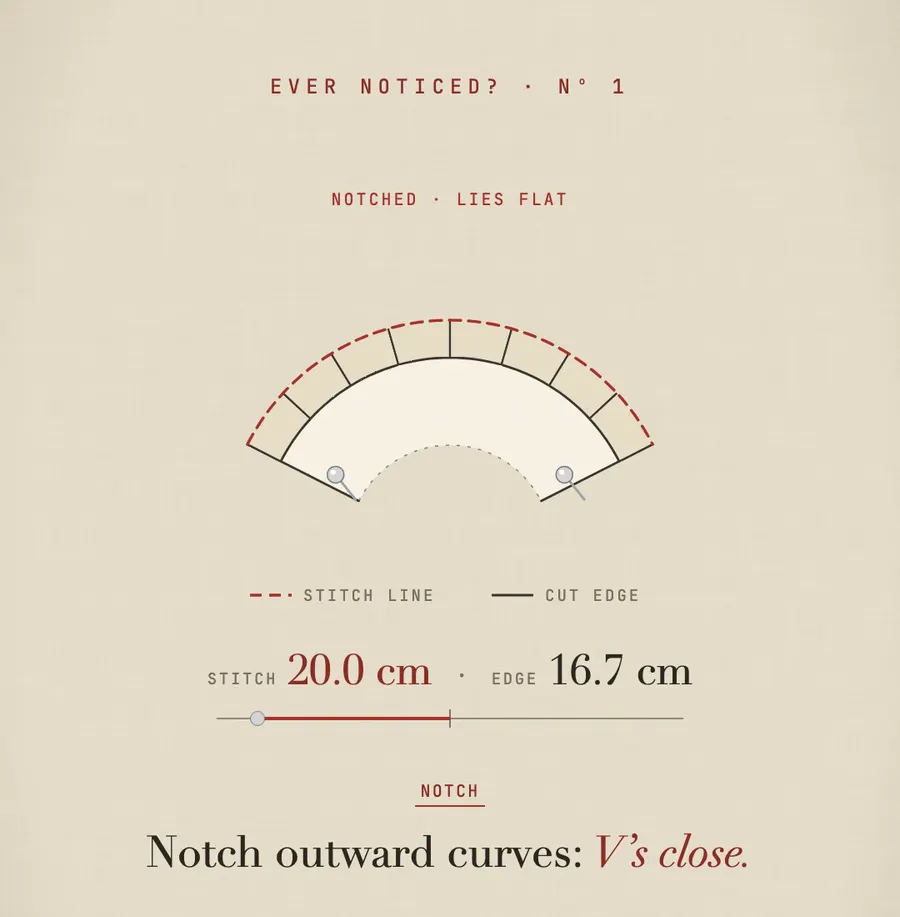
Ever Noticed? · Nº 1Why curved seams get clippedOn a curved seam, the seam allowance’s cut edge is a different length from the stitch line. Clipping lets the allowance of an inward curve spread open; notching takes the extra out of an outward curve. Either way, the turned seam lies flat.
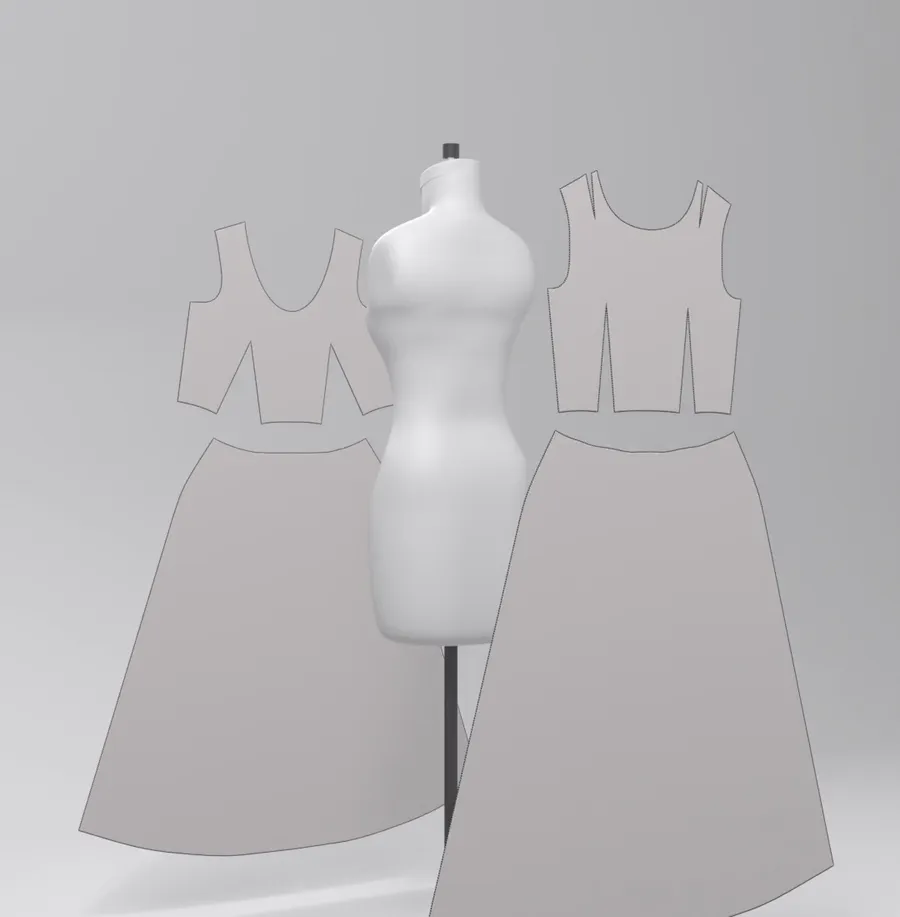
How 3D fashion worksHow 3D garment simulation works: from one particle to a dressA 3D garment is made of thousands of tiny points of cloth. Each flat pattern piece is filled with them, seams join the pieces point to point, and the simulation pulls the seams shut and lets the cloth settle on the body, stretching and bending like fabric.
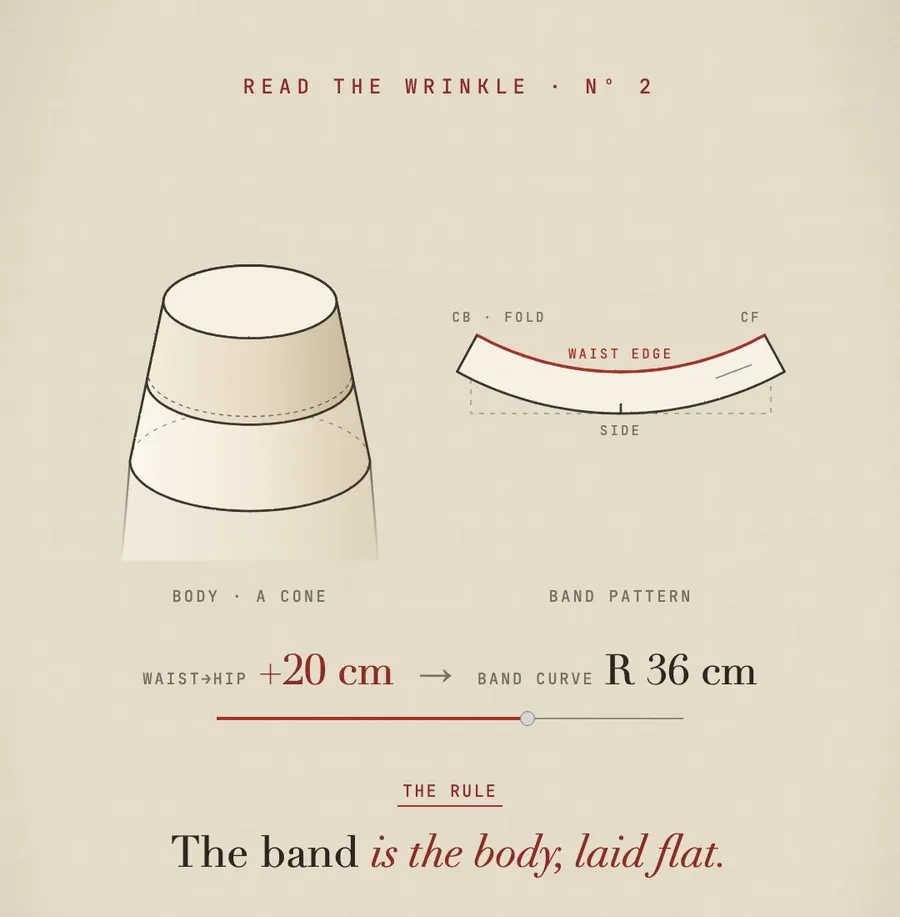
Read the Wrinkle · Nº 2Why a waistband gapes at the backA waistband gapes because a straight band is cut for a tube, but between the waist and the high hip the body is a cone. Cut the band as a curved slice of that cone, a contour waistband, and both edges follow the body.
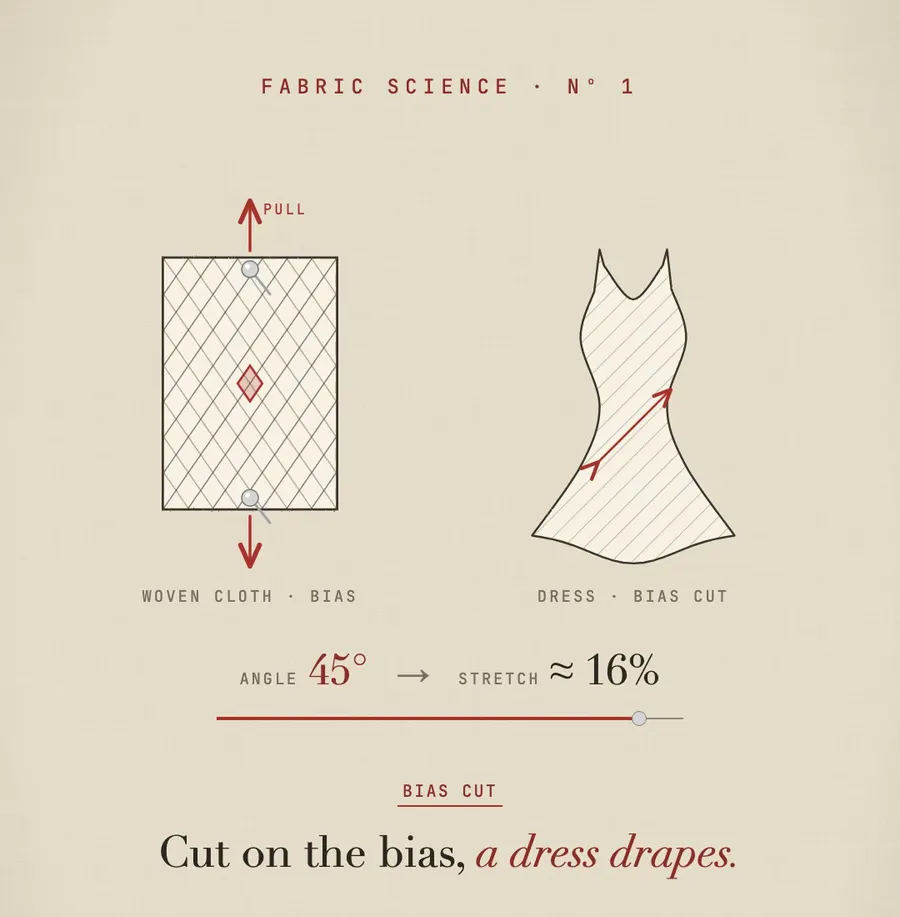
Fabric Science · Nº 1Why the bias stretches, and why bias-cut dresses drapeWoven cloth stretches on the bias because its square grid of threads can shear into diamonds. The threads themselves do not stretch; the grid changes shape, which is why bias-cut cloth gives, clings and flows.
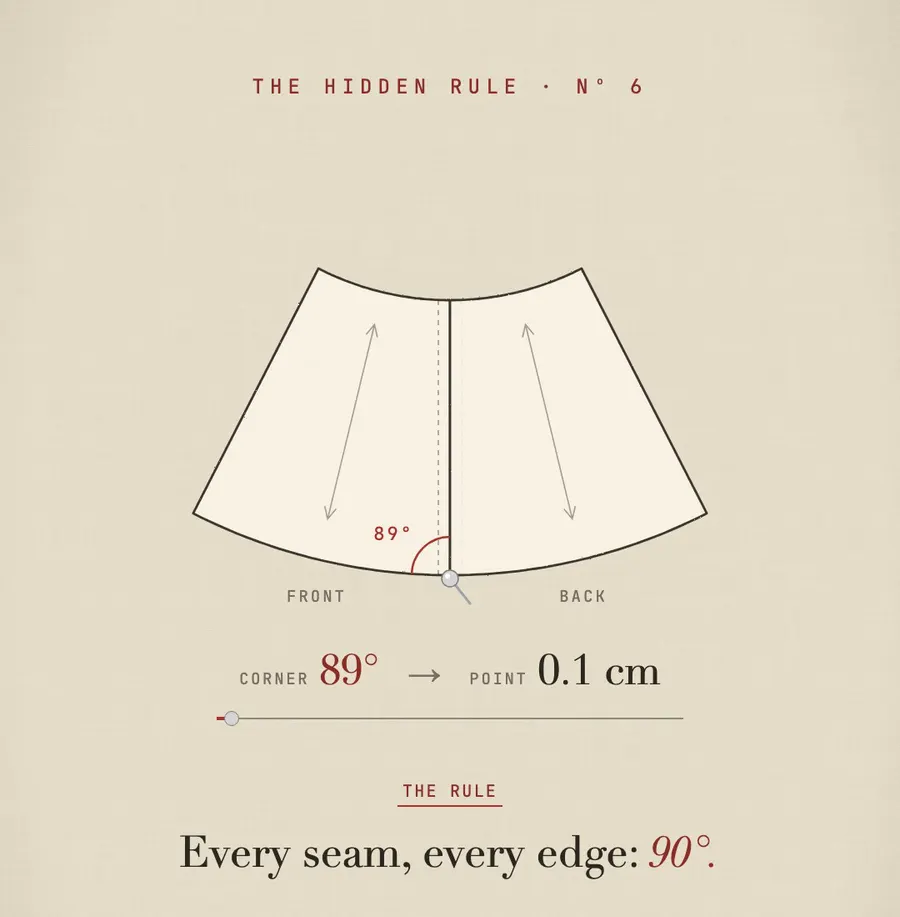
The Hidden Rule · Nº 6The 90° rule: seams meet hems squareWherever a seam meets an edge, such as a hem, neckline or armhole, the corner should be 90°. If it is not, the two pieces meet at a point when sewn, and the edge dips or peaks at the seam.
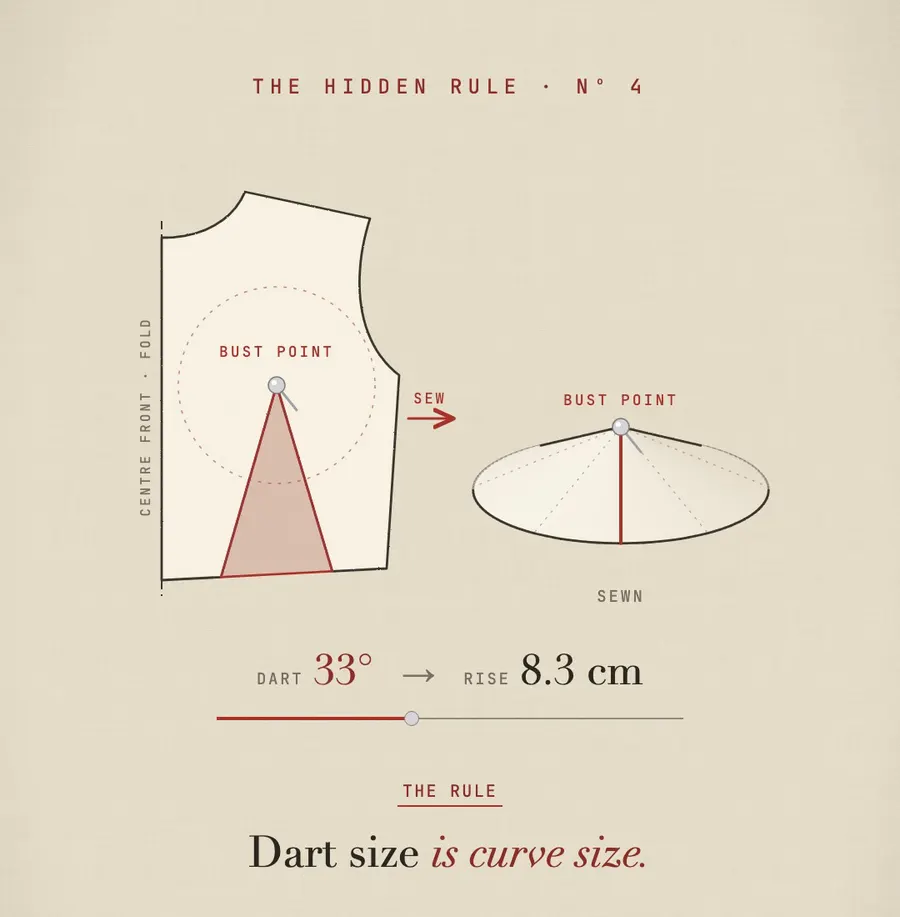
The Hidden Rule · Nº 4Darts turn flat cloth into 3DA dart is a wedge of cloth taken out and sewn closed. Closing the wedge forces the flat cloth to rise into a cone, so a bigger dart makes a deeper shape and a smaller dart a flatter one.
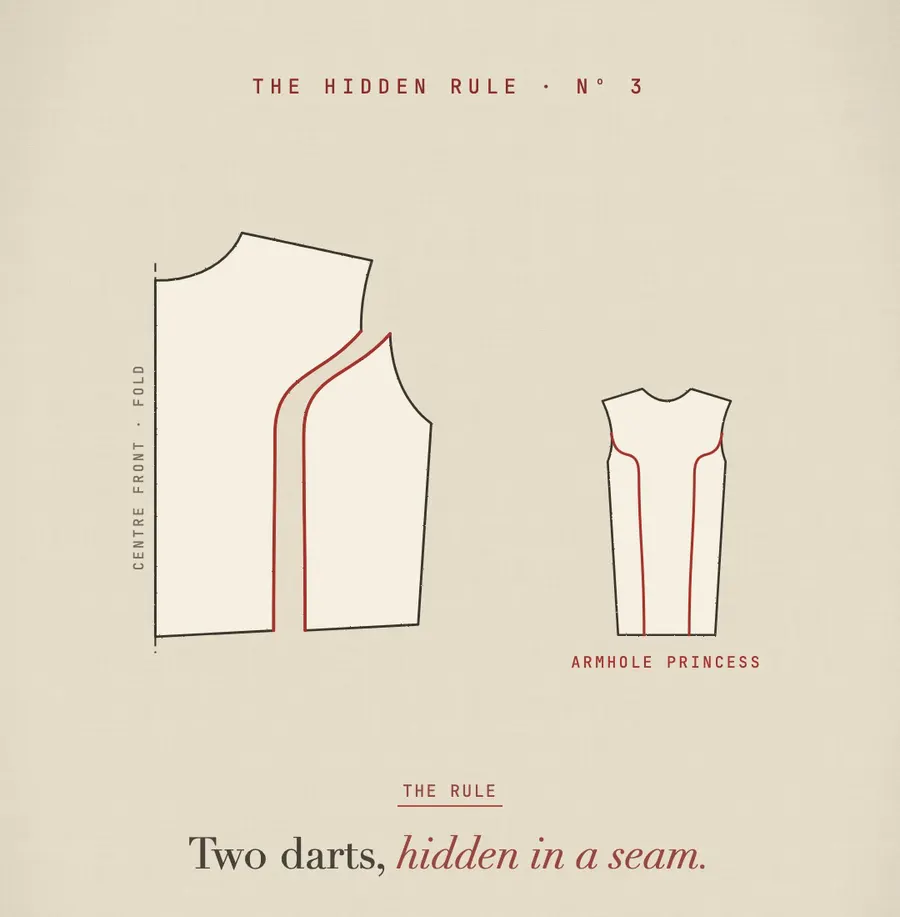
The Hidden Rule · Nº 3A princess seam is two darts holding handsA princess seam is the shoulder dart and the waist dart of a bodice block, joined by one line through the bust point and cut apart. The darts disappear and their shaping moves into the seam.
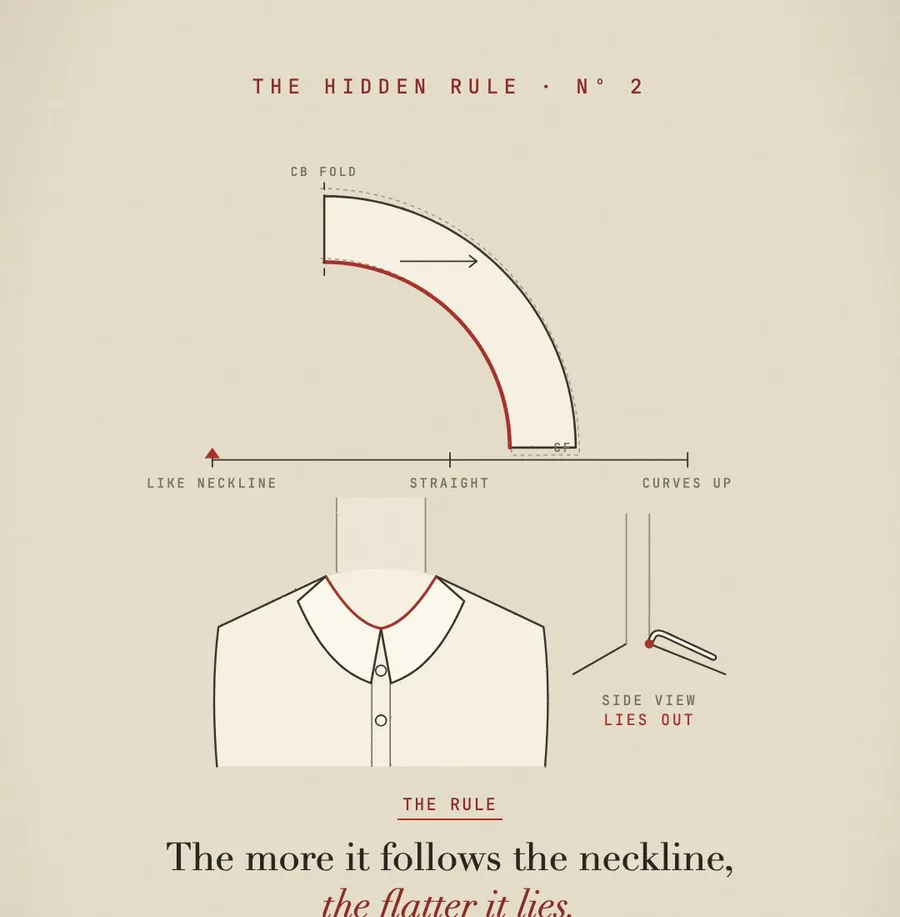
The Hidden Rule · Nº 2One curve decides how a collar sitsLook at the edge of the collar that sews to the neckline. The more that edge follows the curve of the neckline, the flatter the collar lies; the straighter it gets, the more the collar stands.
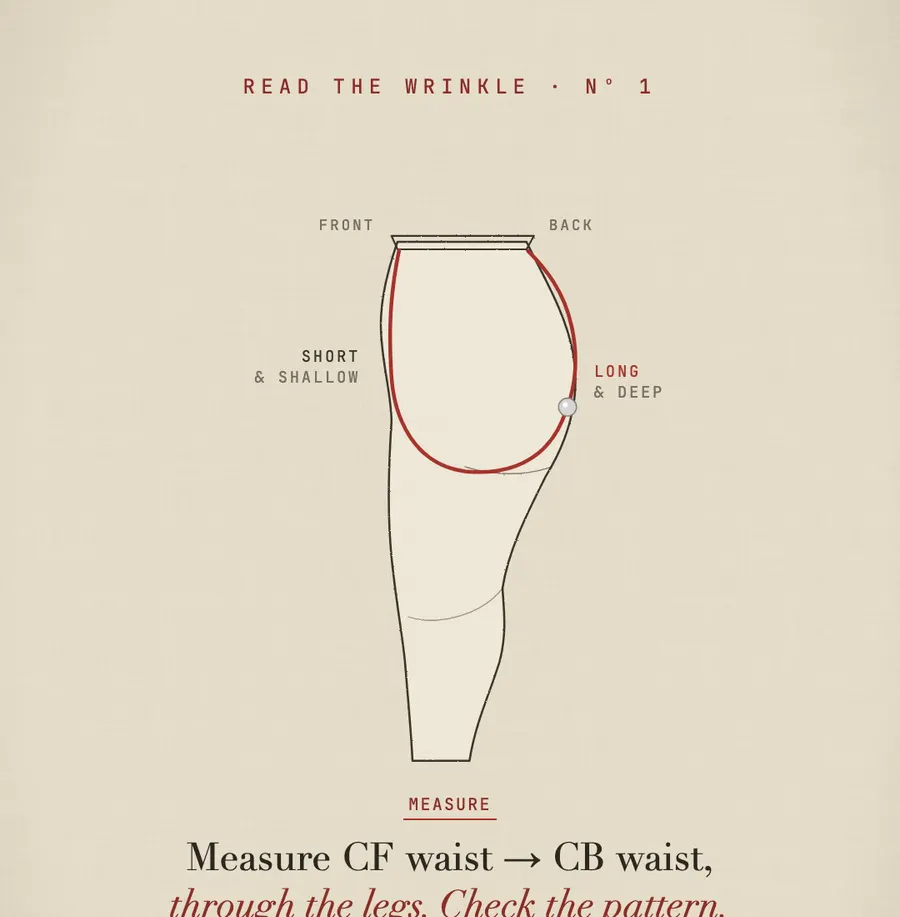
Read the Wrinkle · Nº 1Why trousers pull at the crotch, and the fixTrousers pull into the crotch when the crotch seam is too short. Strain lines point towards the area that is short of fabric. Check the crotch length, and if the pattern is short, extend the back crotch point and lower the back curve slightly.
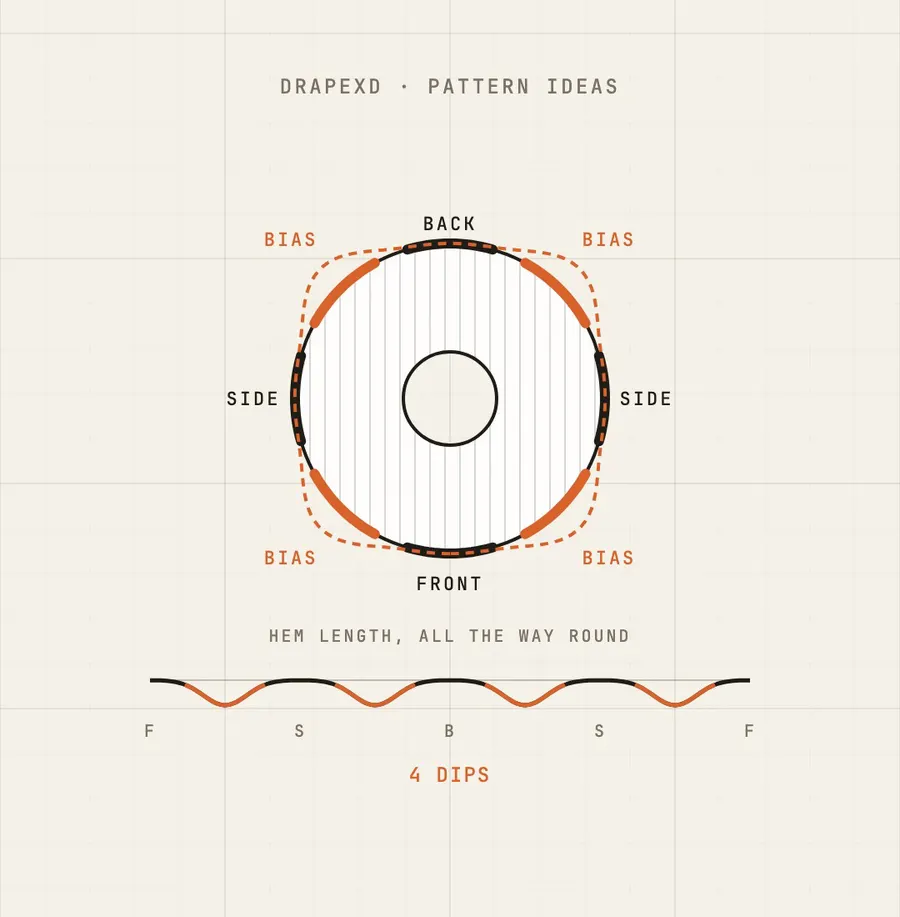
Pattern ideasWhy circle skirts dip in four placesA circle skirt dips in four places because, around its hem, the cloth hangs on the bias at four points halfway between front, back and sides. The bias stretches as the skirt hangs, so those four points grow longer.
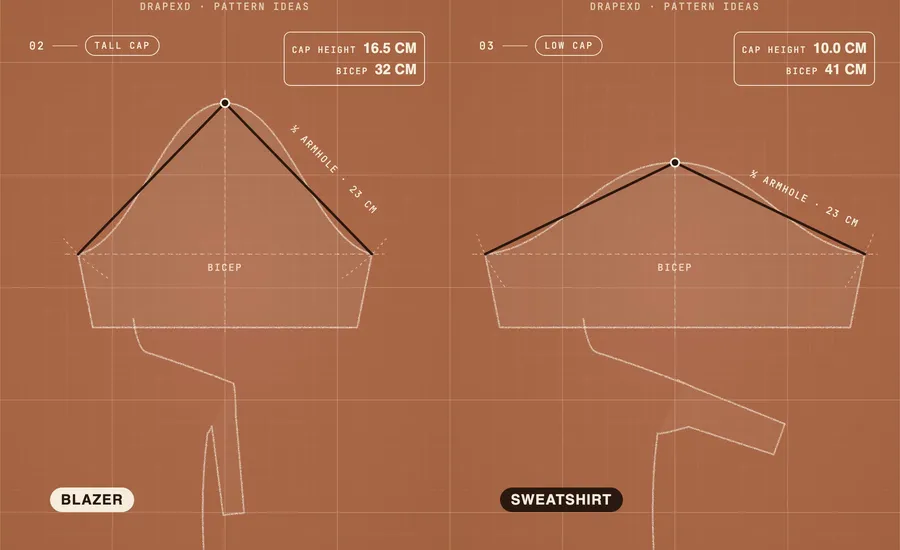
Pattern ideasSleeve caps: look sharp or move freeA sleeve cap’s slope, from the top of the cap to the underarm, has to match half the armhole, so it is fixed. A tall cap brings that slope in close and makes a narrow sleeve that hangs clean but limits reach; a low cap swings it out and makes a wide sleeve you can move in.
Choosing software
Is CLO3D free?What 3D fashion software costs students, and after graduationFree 3D fashion design softwareWhat each free option covers, and its catch
Learning DrapeXD itself
Video lessons and a step-by-step picture guide for every tool are on the Tutorials page.