Fabric Science · Nº 1
Why the bias stretches, and why bias-cut dresses drape
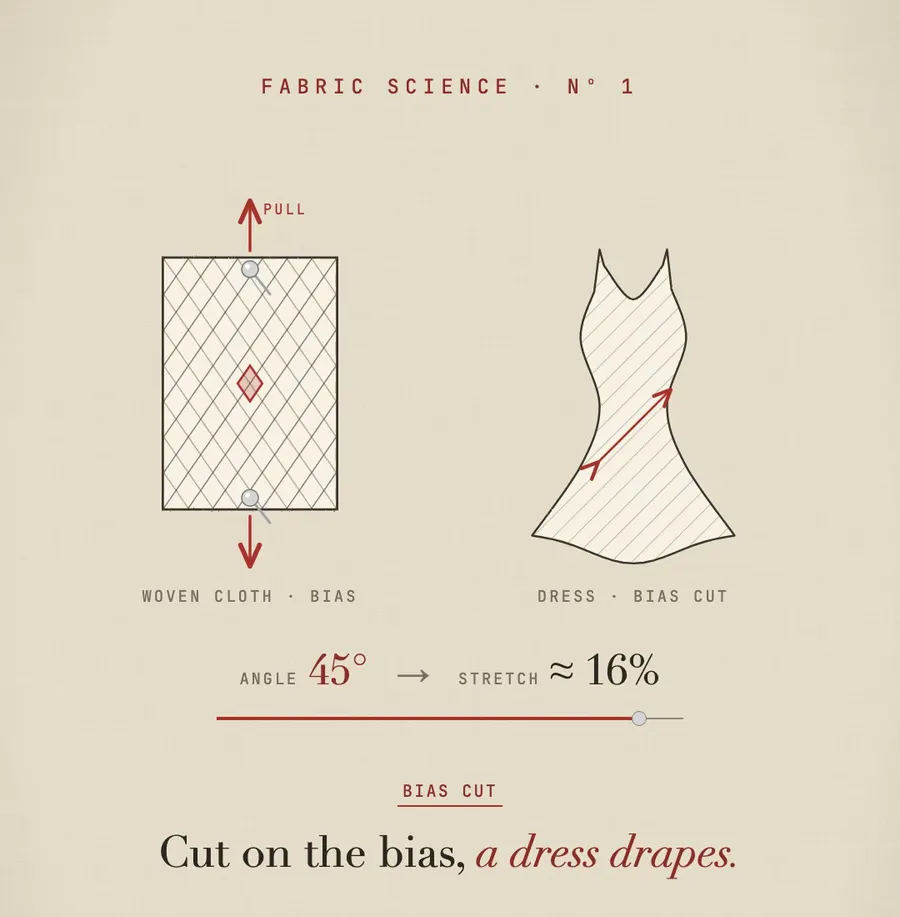
Woven cloth stretches on the bias because its square grid of threads can shear into diamonds. The threads themselves do not stretch; the grid changes shape, which is why bias-cut cloth gives, clings and flows.
DrapeXD · Updated
Straight grain holds
Pull woven cloth along the warp or the weft and it barely moves. The threads run straight along the pull, and they hold.
The true bias gives
Now pull it at 45° to the threads: the true bias. The square cells between the threads shear into diamonds. No thread gets longer, but the whole grid changes shape, so the cloth lengthens in the direction of the pull and narrows across it.
Why bias-cut dresses drape
Cut a dress on the bias and that give lets the cloth follow the body instead of hanging away from it. The grain you choose when you lay a pattern piece on the cloth decides how the garment moves.
The same give explains other things you may have seen: a circle skirt’s hem dropping where it hangs on the bias, and a cowl neckline falling into soft folds.
Watch the reel
Try it in DrapeXD
- Open the fabrics in Texturing and look at a woven fabric’s weave: the warp and weft threads.
- Dress the same piece in a woven fabric and then a knit, drape each, and compare how they hang.
Step-by-step guides: Fabrics · Create a fabric · Drape