Pattern ideas
Sleeve caps: look sharp or move free
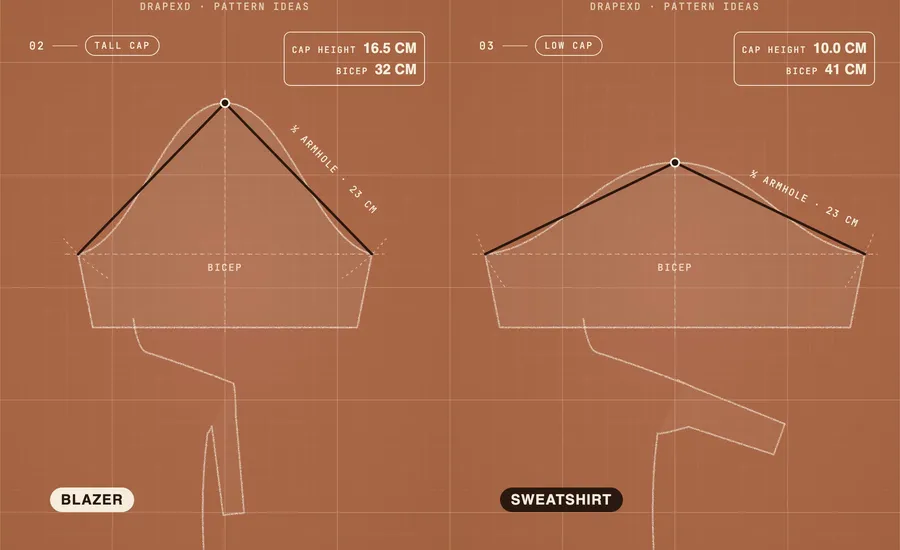
A sleeve cap’s slope, from the top of the cap to the underarm, has to match half the armhole, so it is fixed. A tall cap brings that slope in close and makes a narrow sleeve that hangs clean but limits reach; a low cap swings it out and makes a wide sleeve you can move in.
DrapeXD · Updated
The slope is fixed by the armhole
A sleeve cap has to sew into the armhole. So the slope from the top of the cap down to the underarm always measures half the armhole. Whatever you do to the cap, that line keeps its length.
Tall cap: a sharp sleeve
Make the cap tall and that same slope lands close in. The sleeve gets narrow and hangs clean with the arms down, as on a blazer.
Lift the arm, though, and a tall cap pulls tight across the back.
Low cap: room to move
Drop the cap and the slope swings out. The sleeve gets wide and sits at an angle to the body, so you can reach, as in a sweatshirt.
Same armhole, same slope: height and width just trade places.
Wanting both
Tailors add a gusset: a small diamond under the arm that gives back the reach a tall cap takes away. Every sleeve is a choice between looking sharp and moving freely.
Watch the reel
Try it in DrapeXD
- Draft a sleeve and sew it into the bodice armhole.
- Reshape the cap: taller and narrower, then lower and wider, keeping its edge the length of the armhole.
- Drape each version and compare how the sleeve hangs.