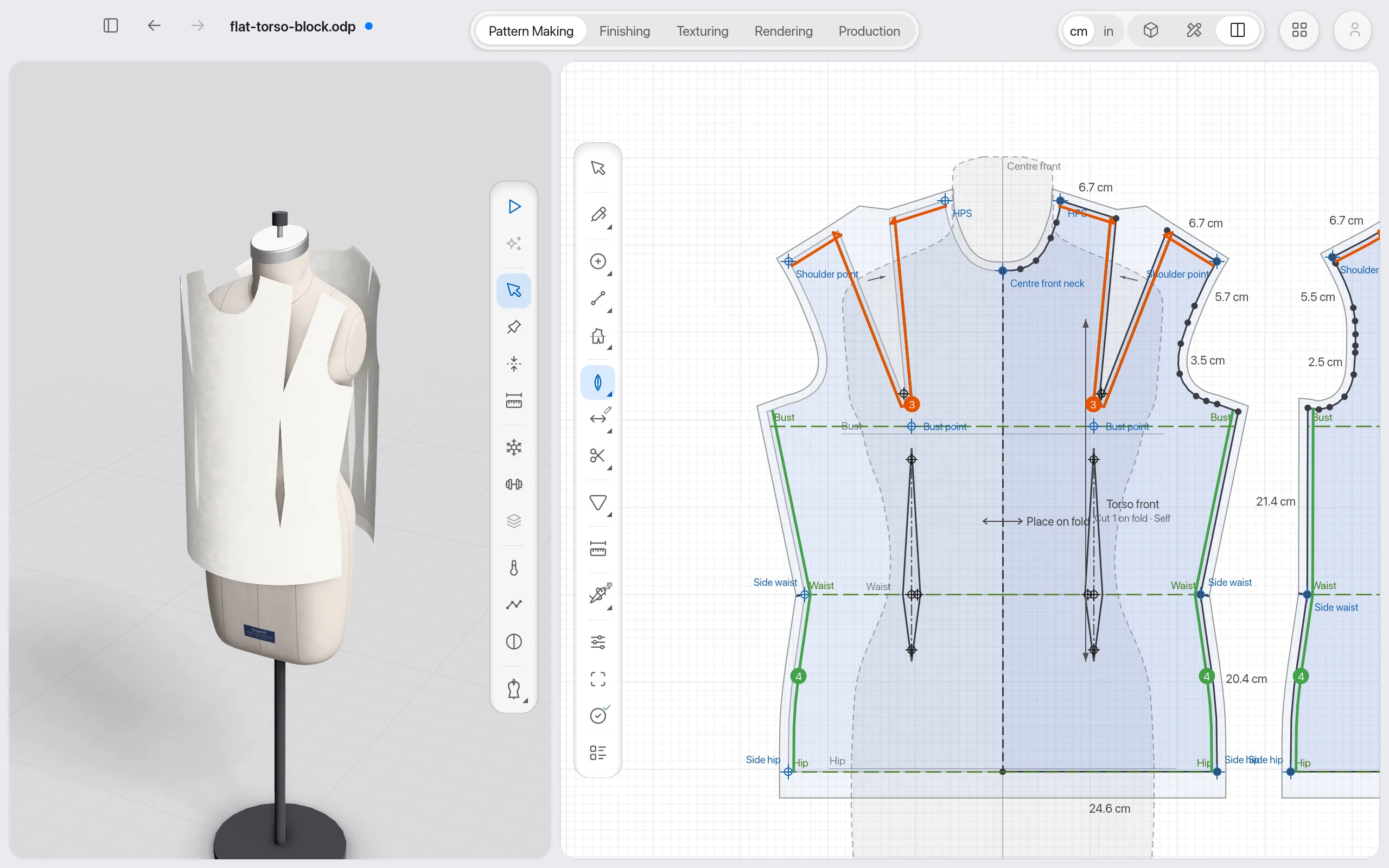
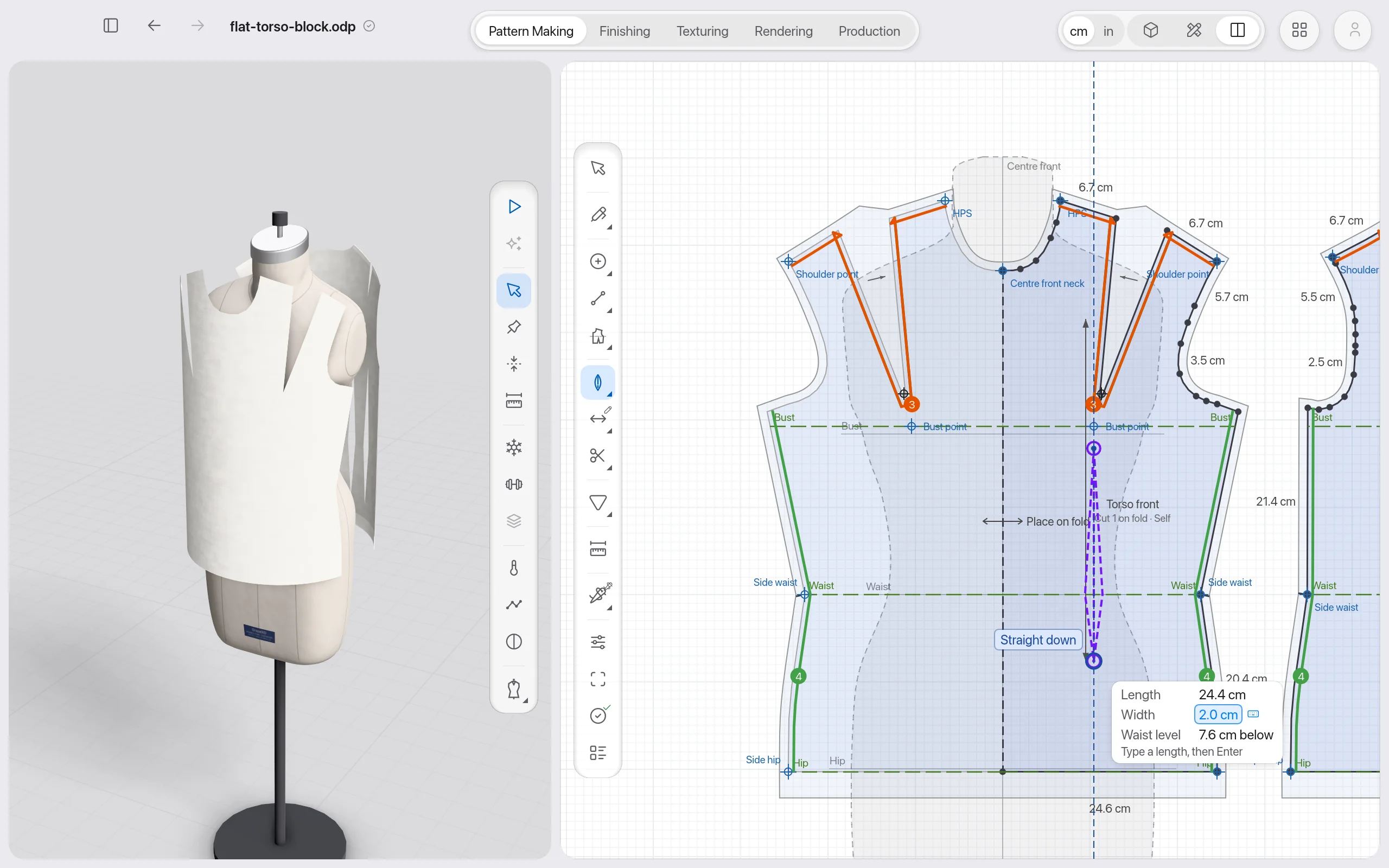
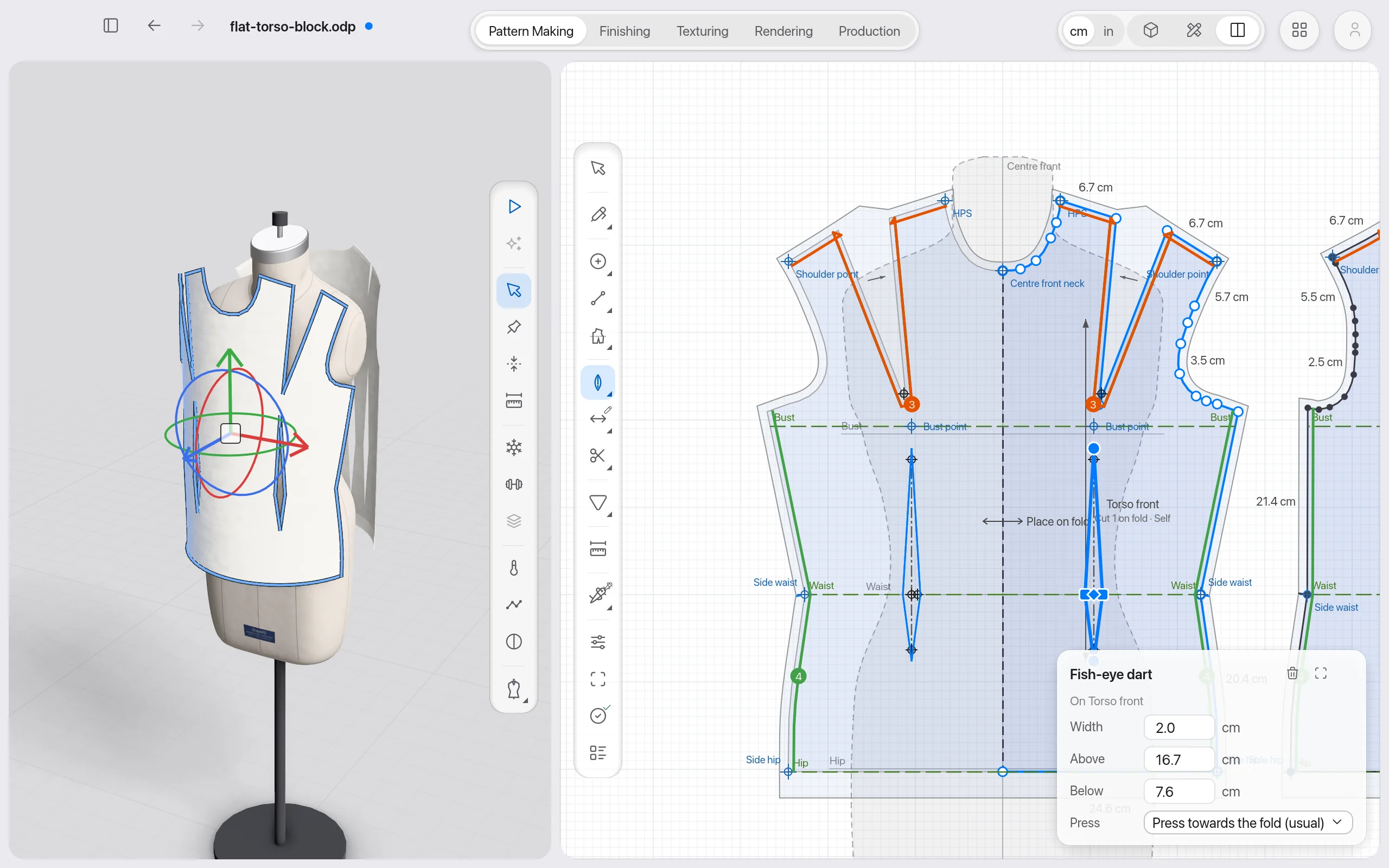
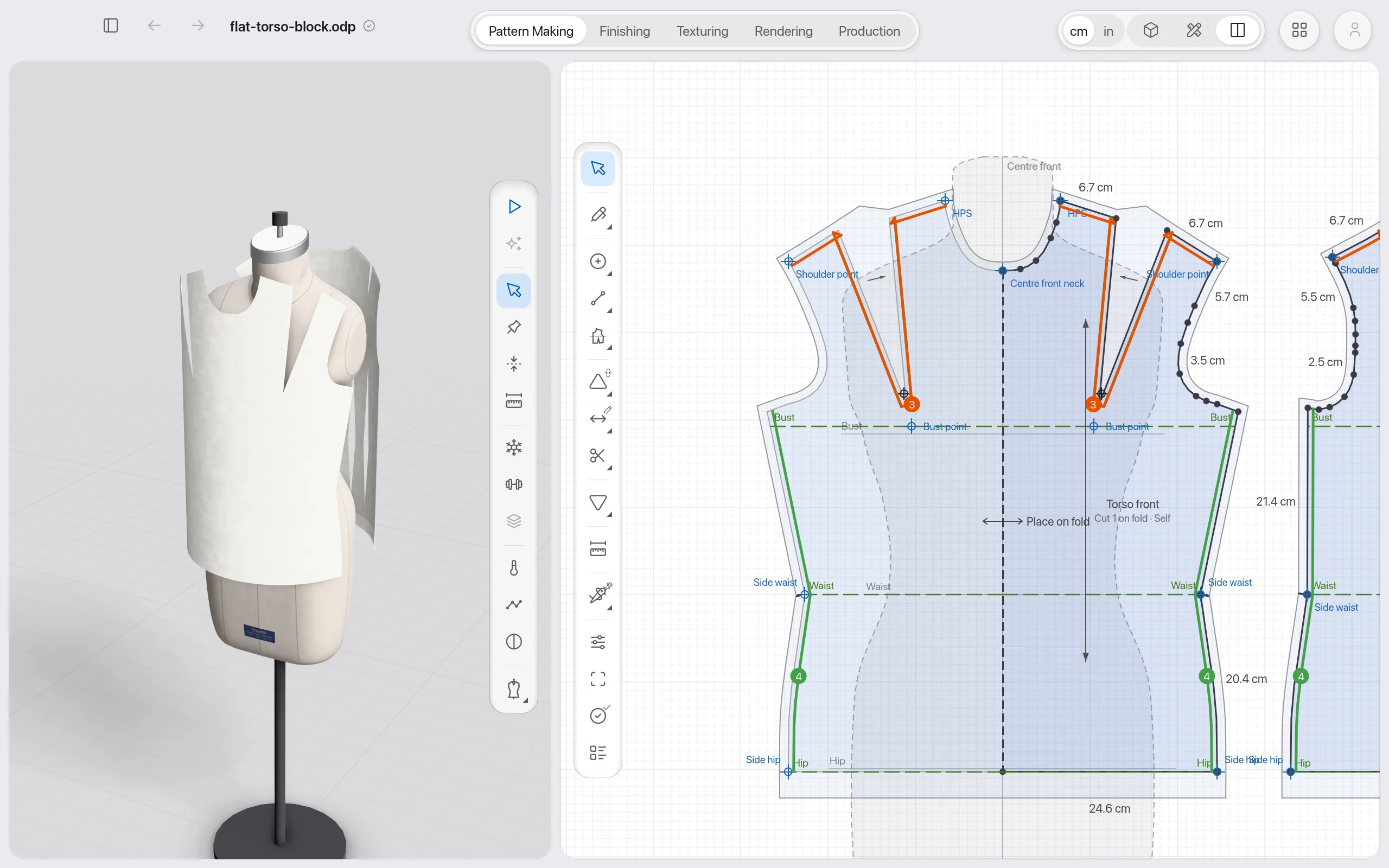
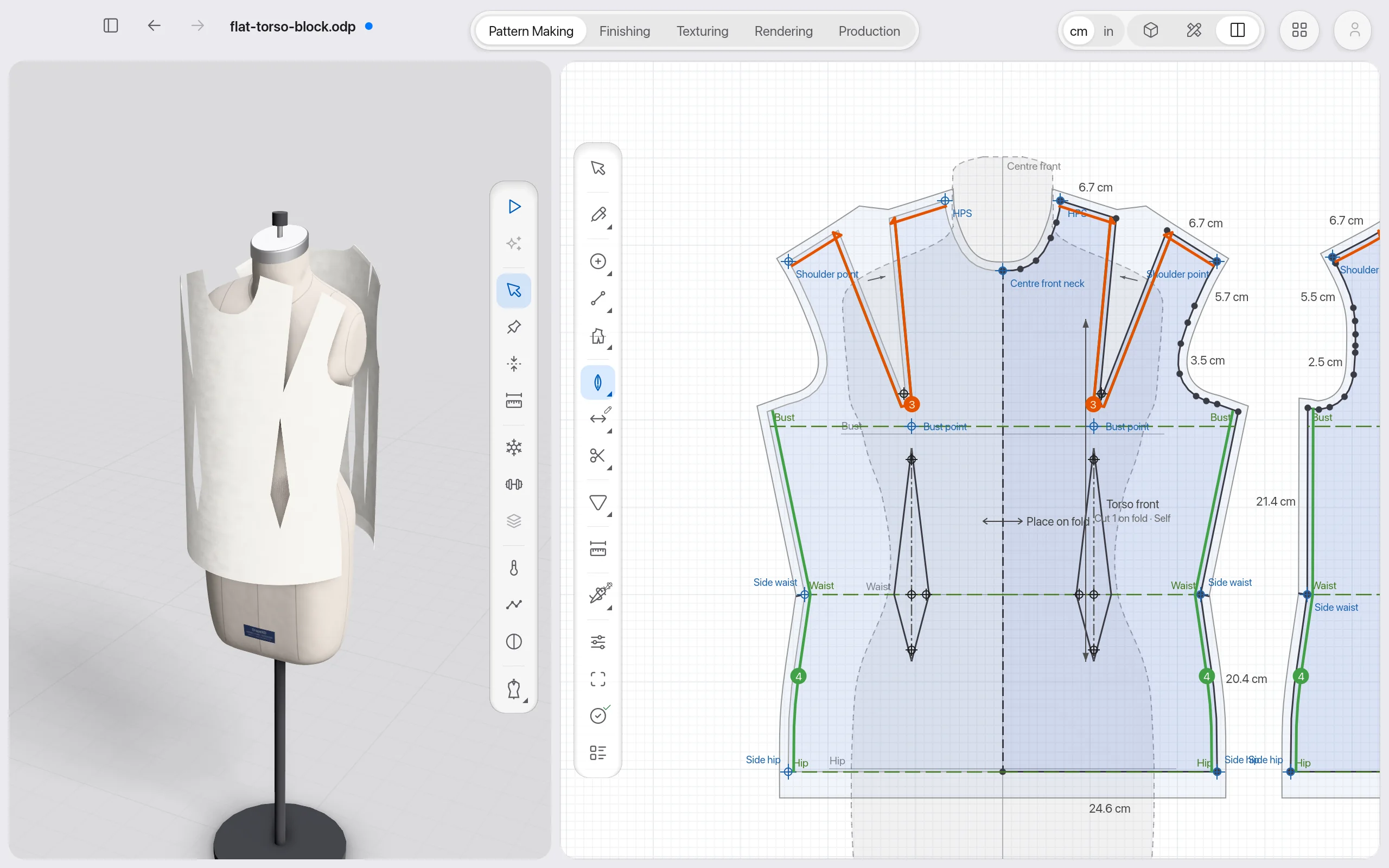
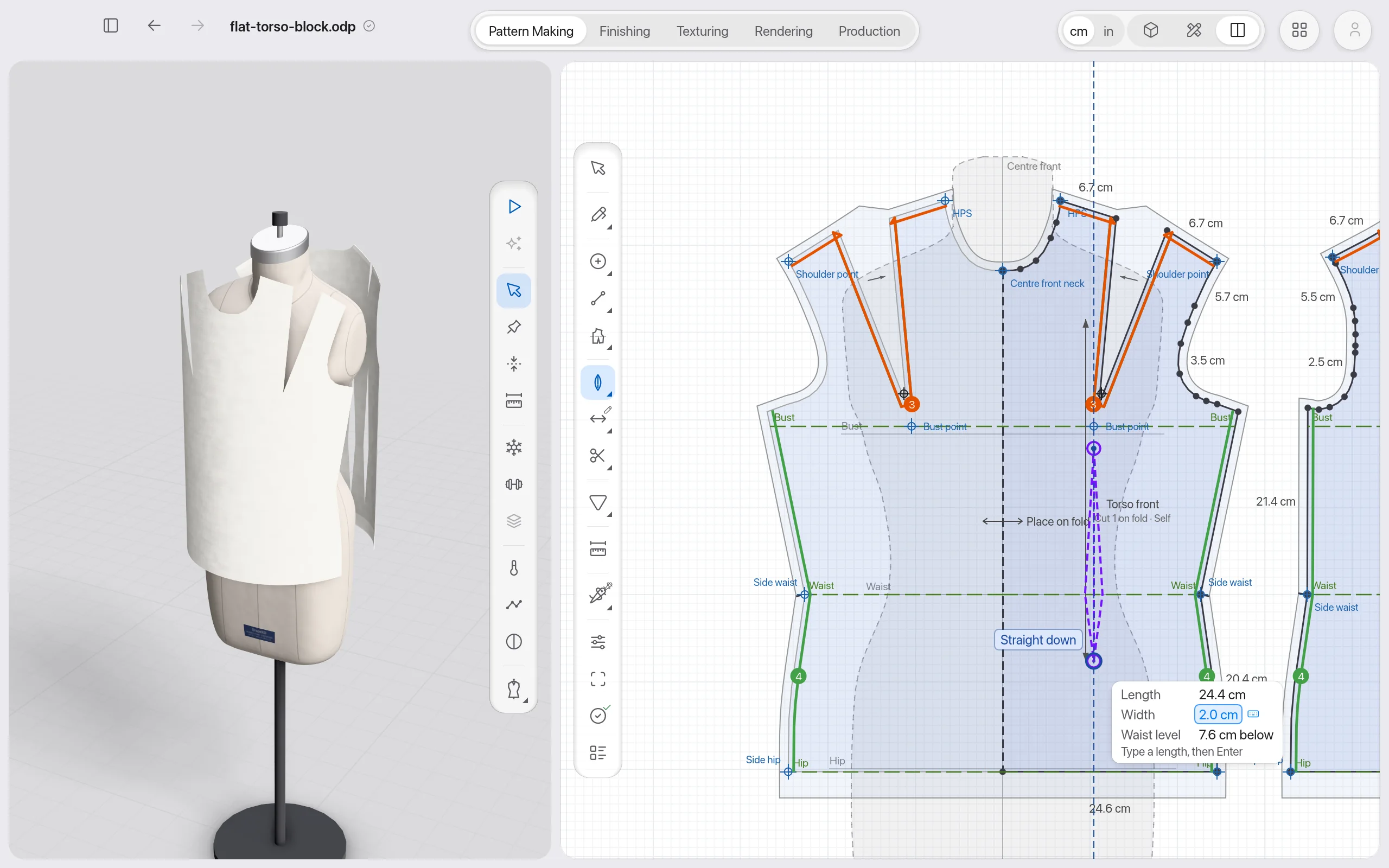
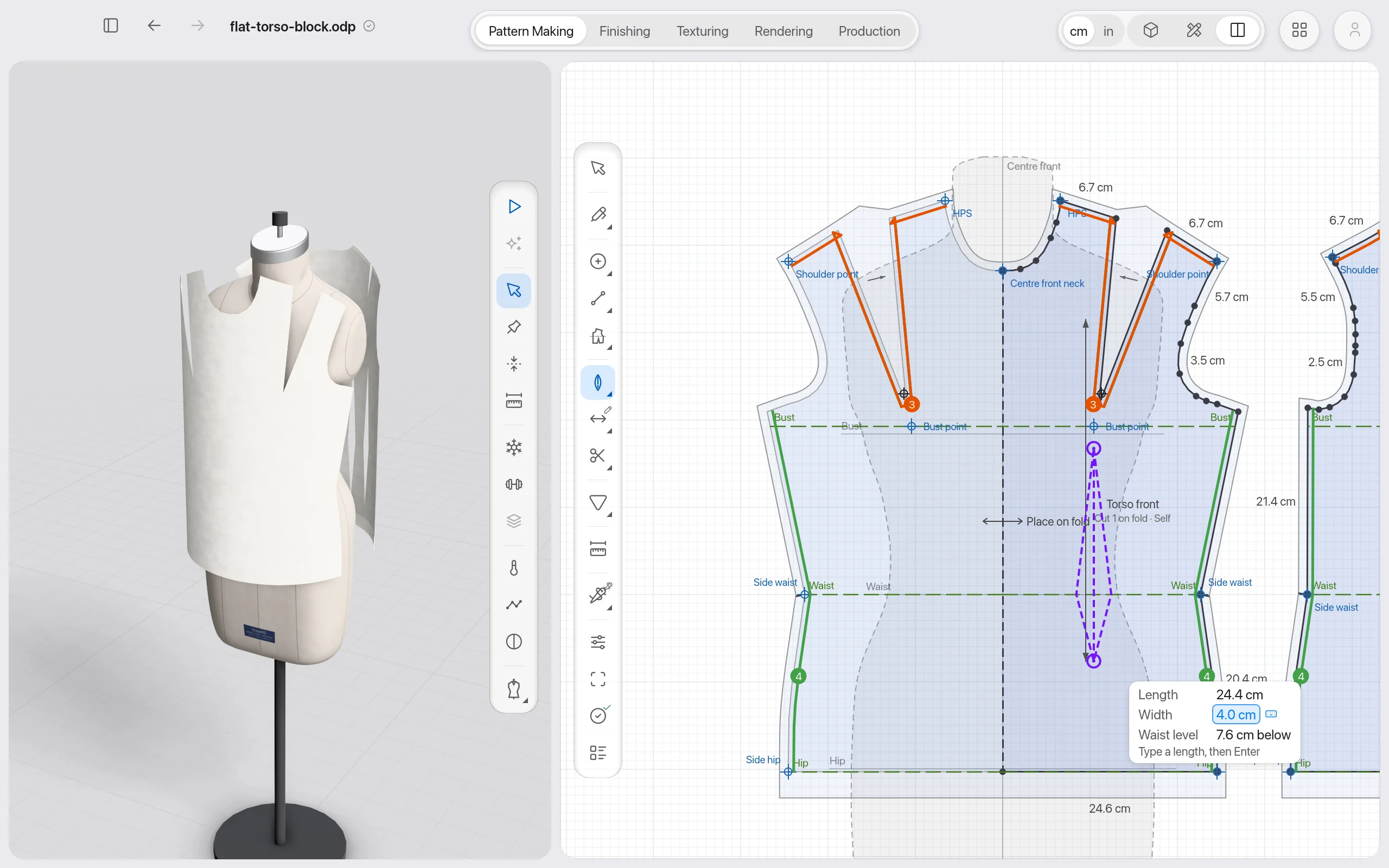
Click inside a piece where the fish-eye dart's top point goes, such as a little below the bust line.
Nothing is placed yet. Click on a piece, a little below the bust level.
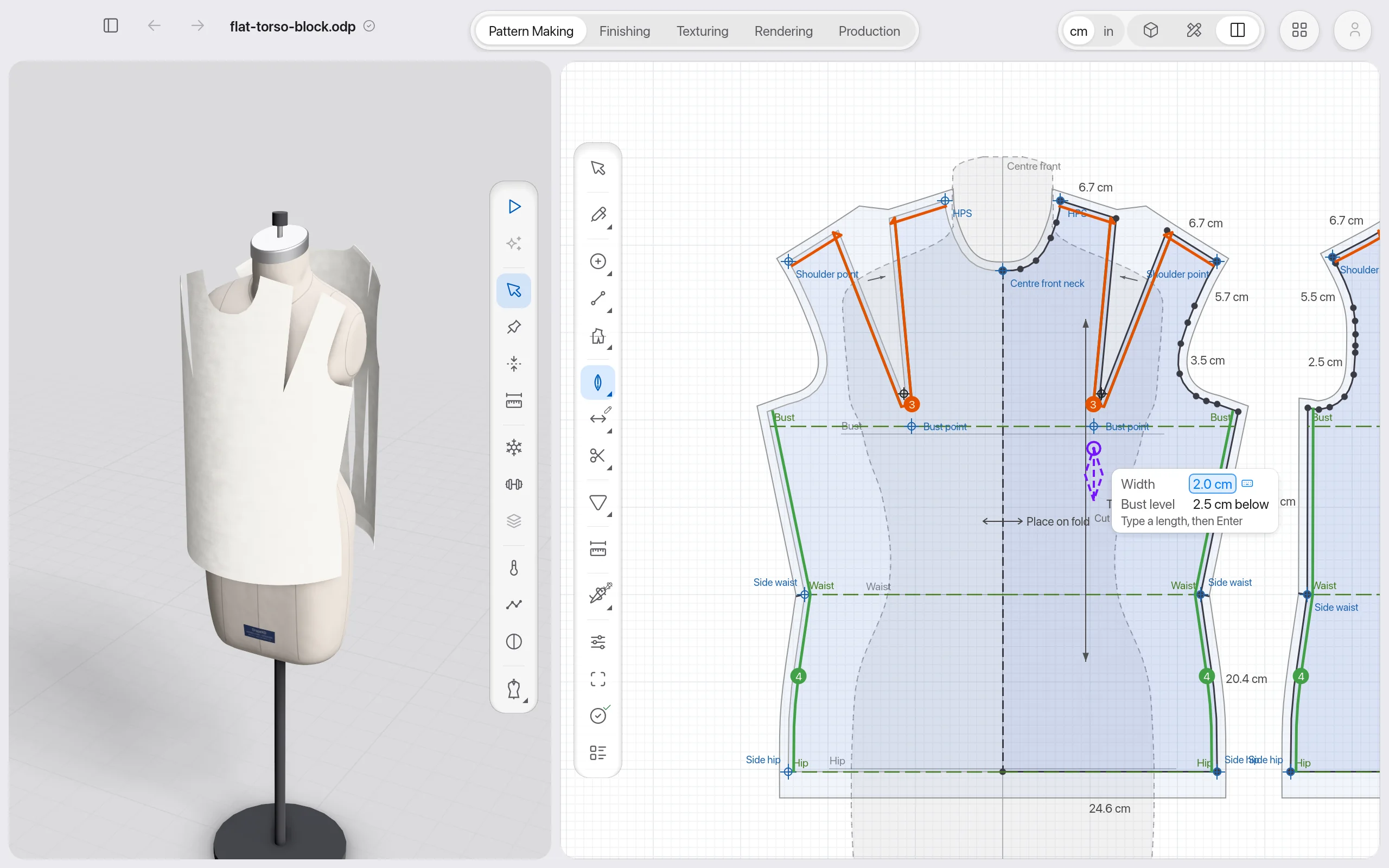
Click its bottom point; it snaps straight down from the top. Drag sideways from there to set the width, or type it.
The top point is placed. Click the bottom point, or press on it and drag sideways to set the width.
It can't go there: let go and it stays as it was.
You were moving a point or a side of a fish-eye dart that is already in, to a place it can't go. Let go and it goes back.
The fish-eye dart has to be inside the piece, all of it.
Move the dart in from the outline: all of it, its width too, has to be inside.
That's too close to the edge: keep the fish-eye dart at least 1.0 cm in from it.
Move the dart further in from the edge or the fold.
That would cross another dart, fish-eye dart or cut-out. Keep it clear of them.
Put the dart where no other dart, fish-eye dart or cut-out crosses it.
The fish-eye dart would take in almost nothing. Make it at least 0.2 cm wide.
Make the dart wider: drag its side out or type a larger width.
The fish-eye dart is too short. Make it at least 2.0 cm long, point to point.
Click the bottom point further from the top point.
That is the mirror half of a piece cut on the fold. Draw the fish-eye dart on the half that's drawn; the other half gets its mirror image.
Click on the half of the piece that isn't pale.