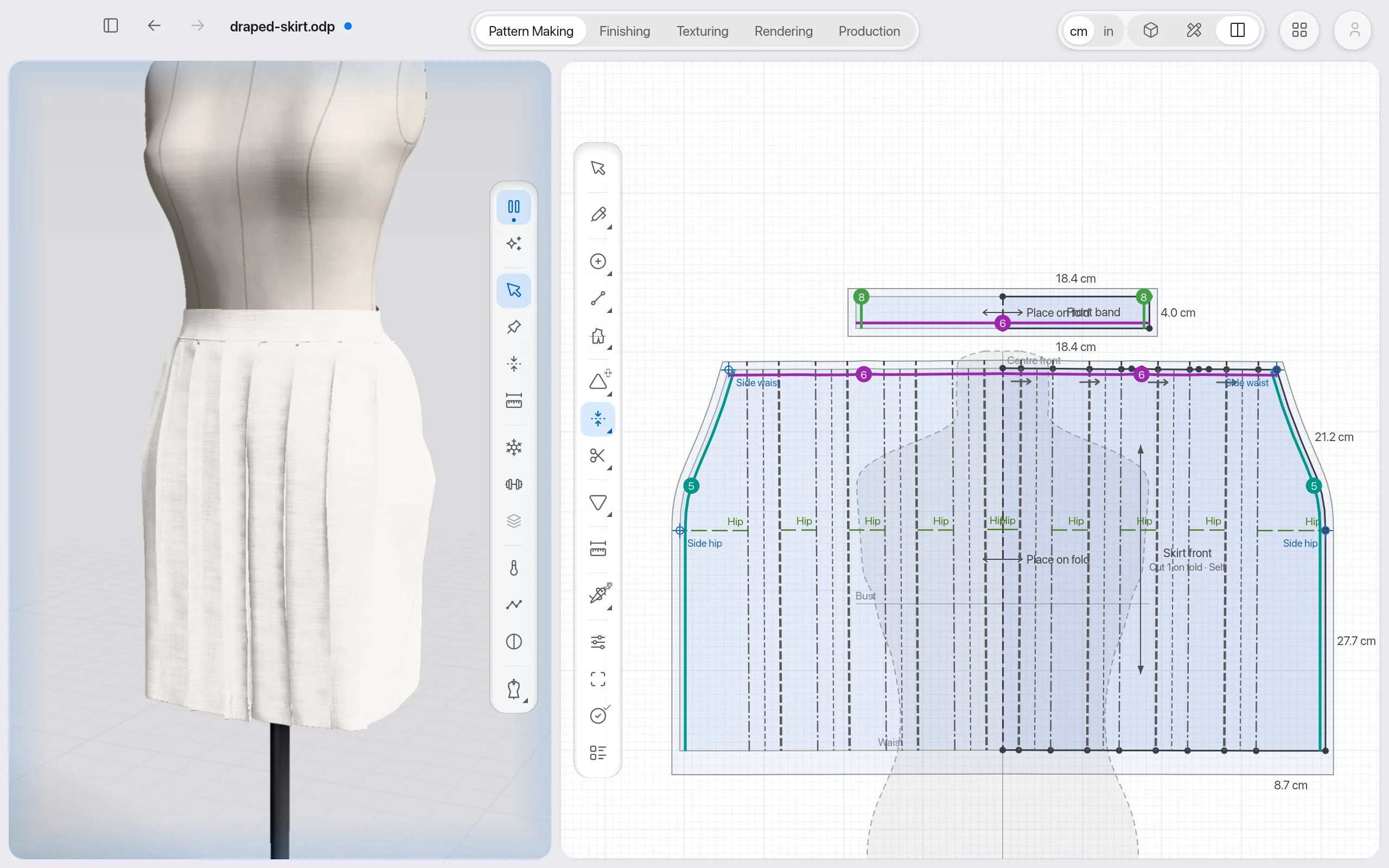
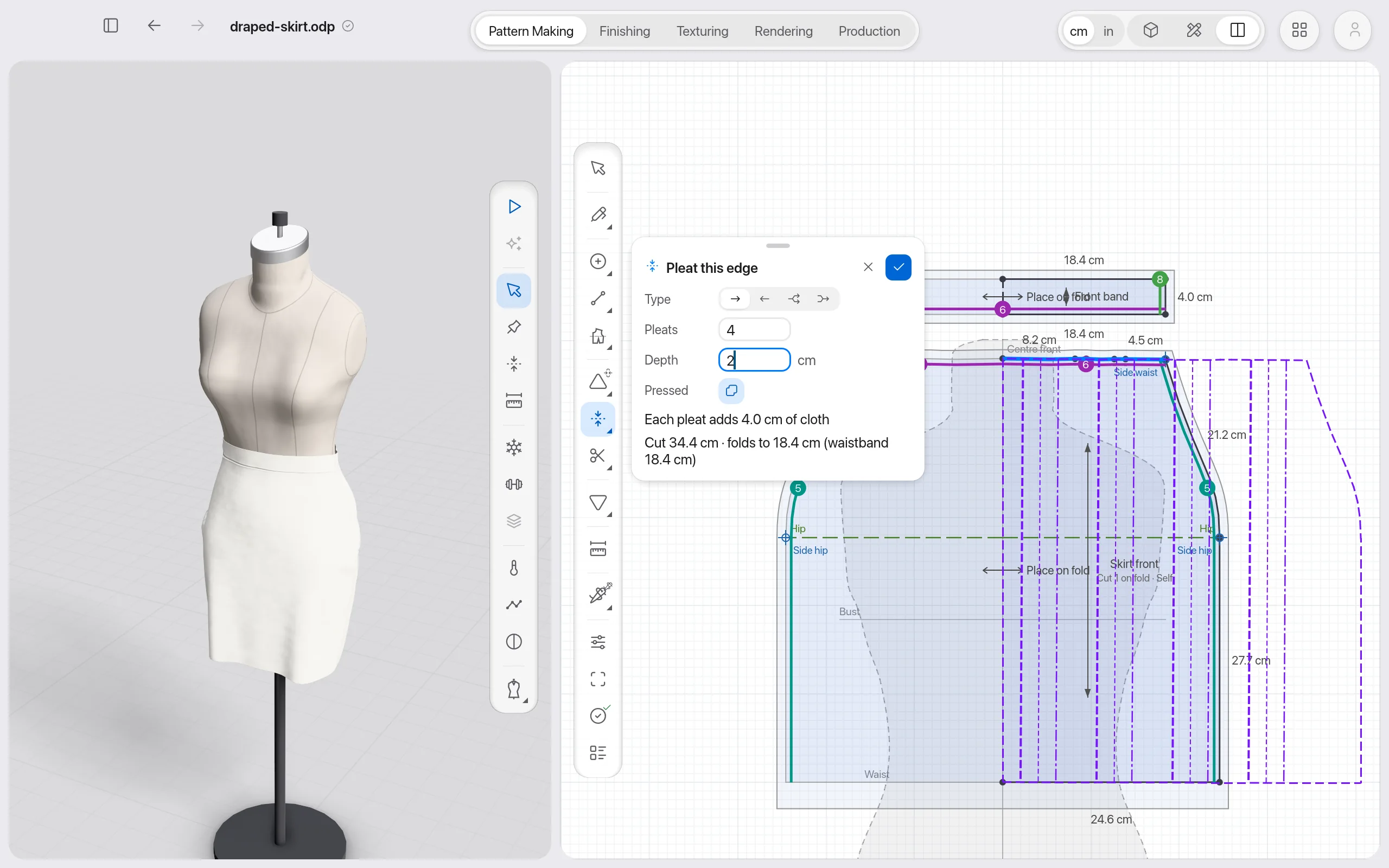
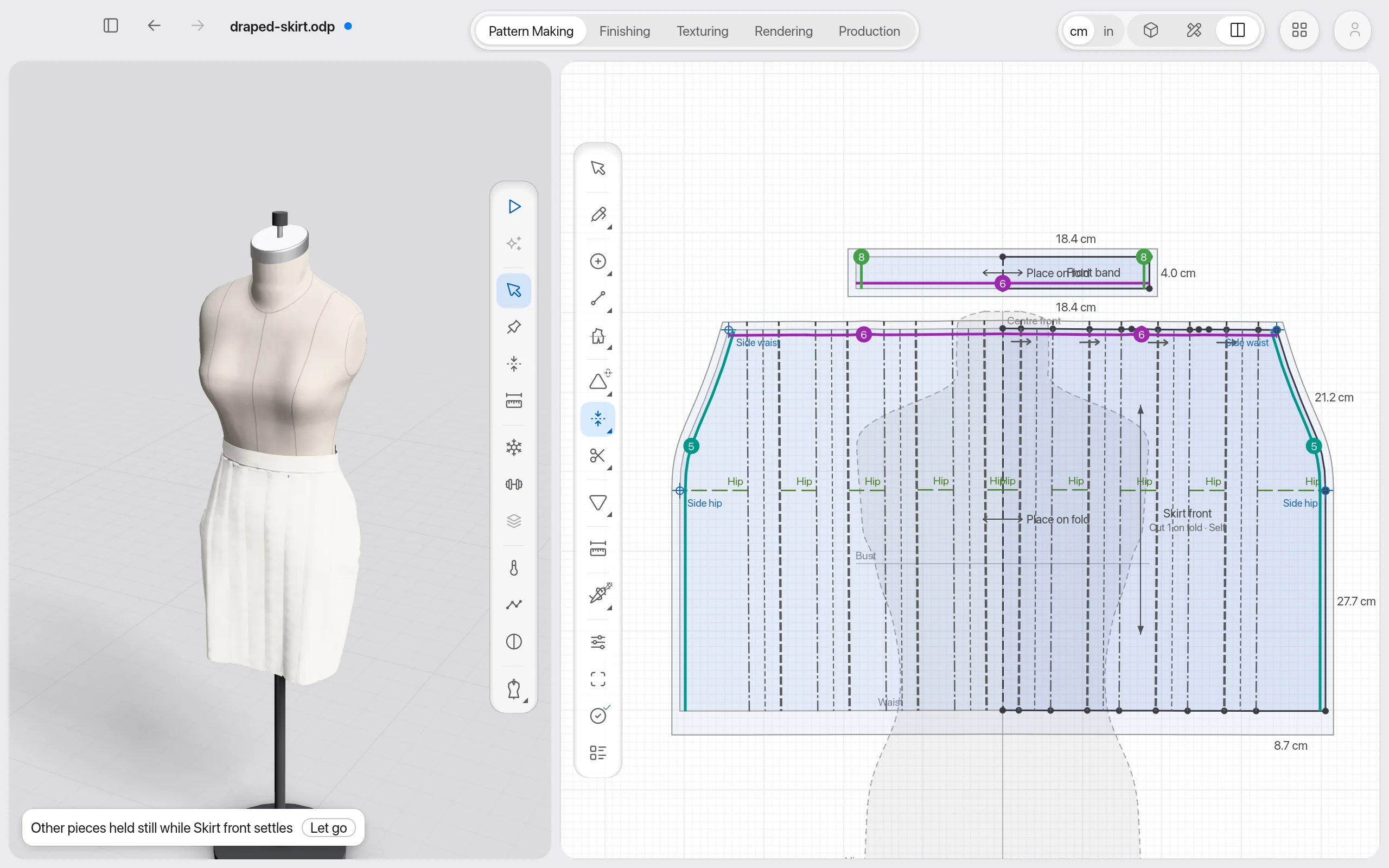
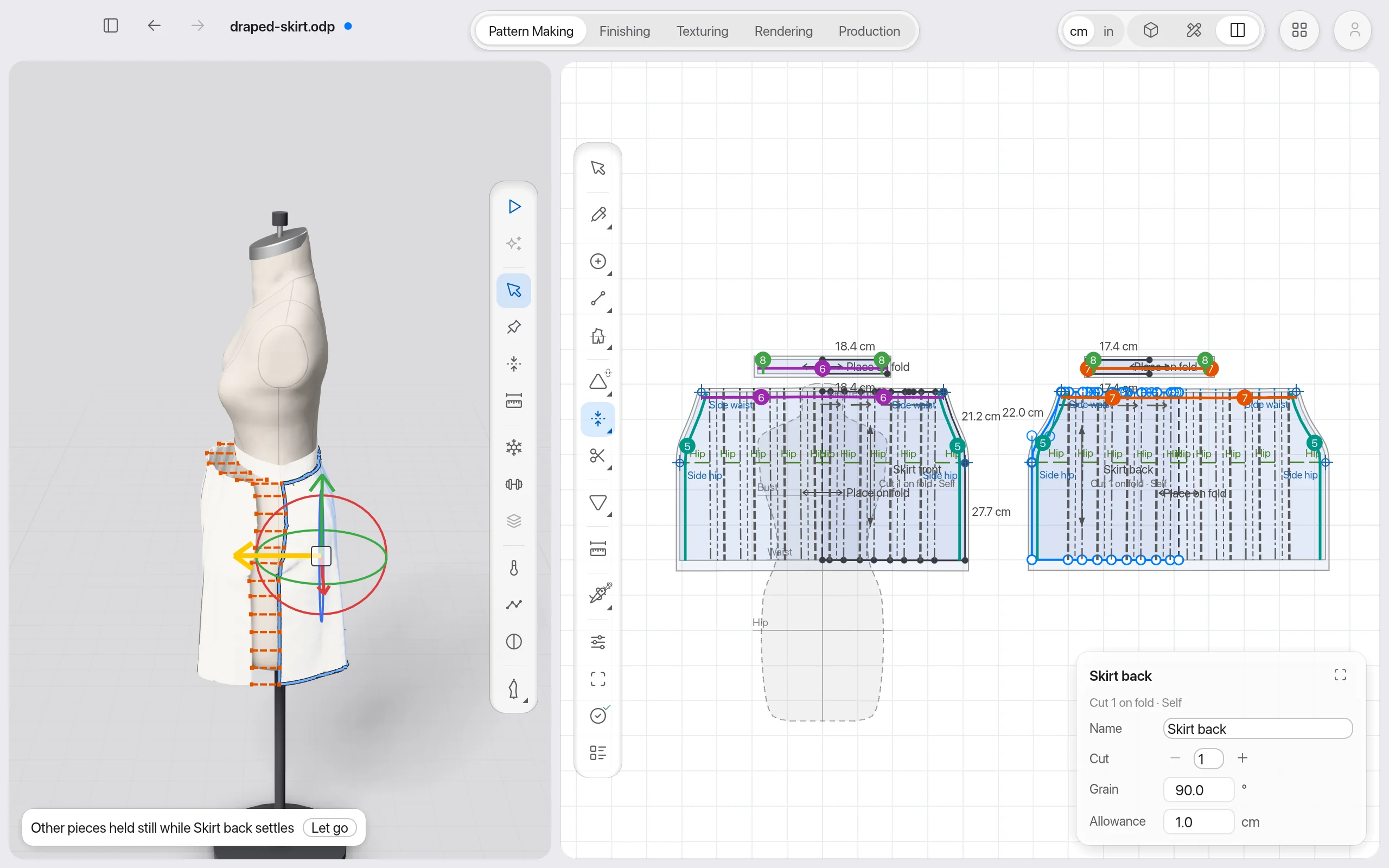
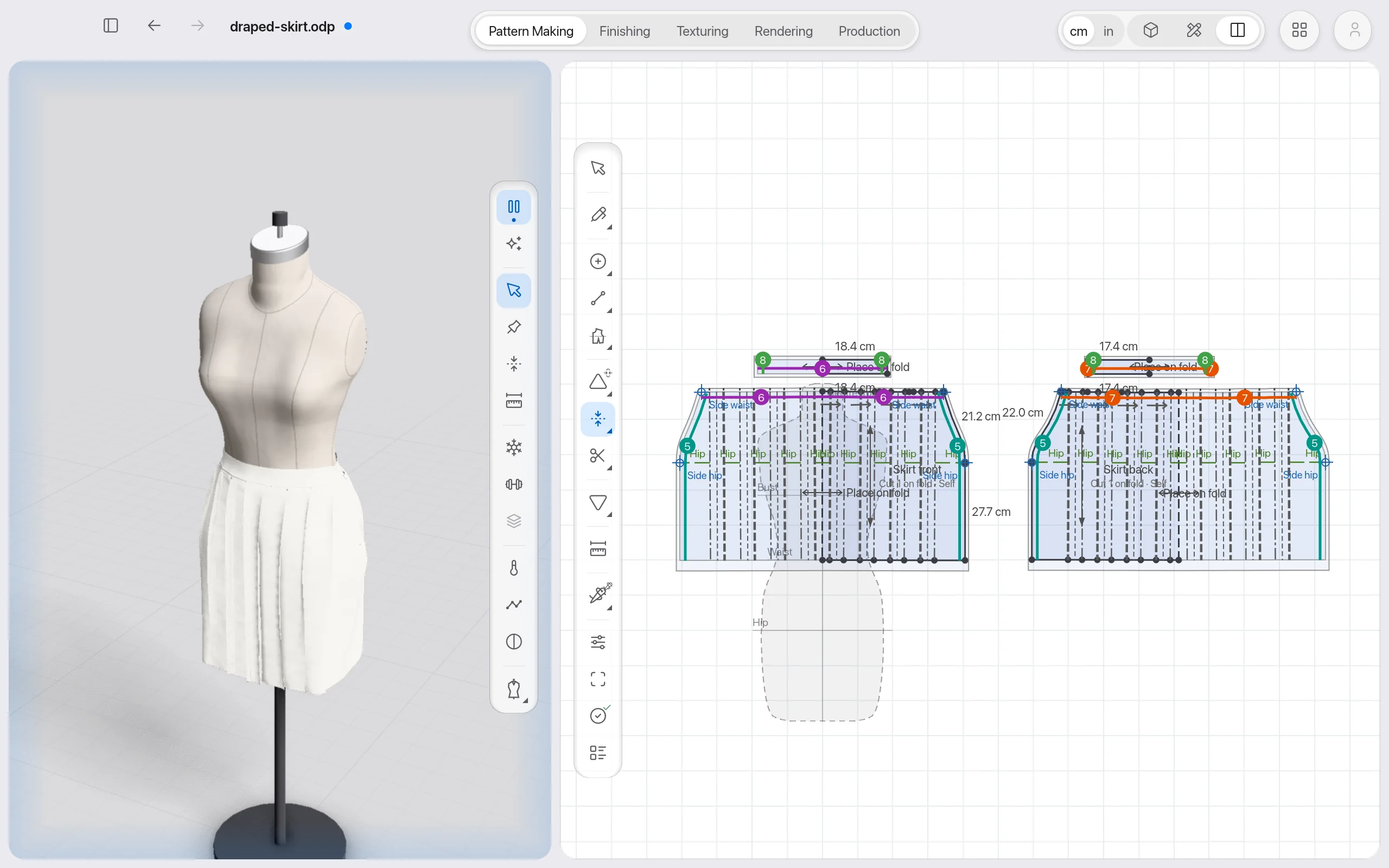
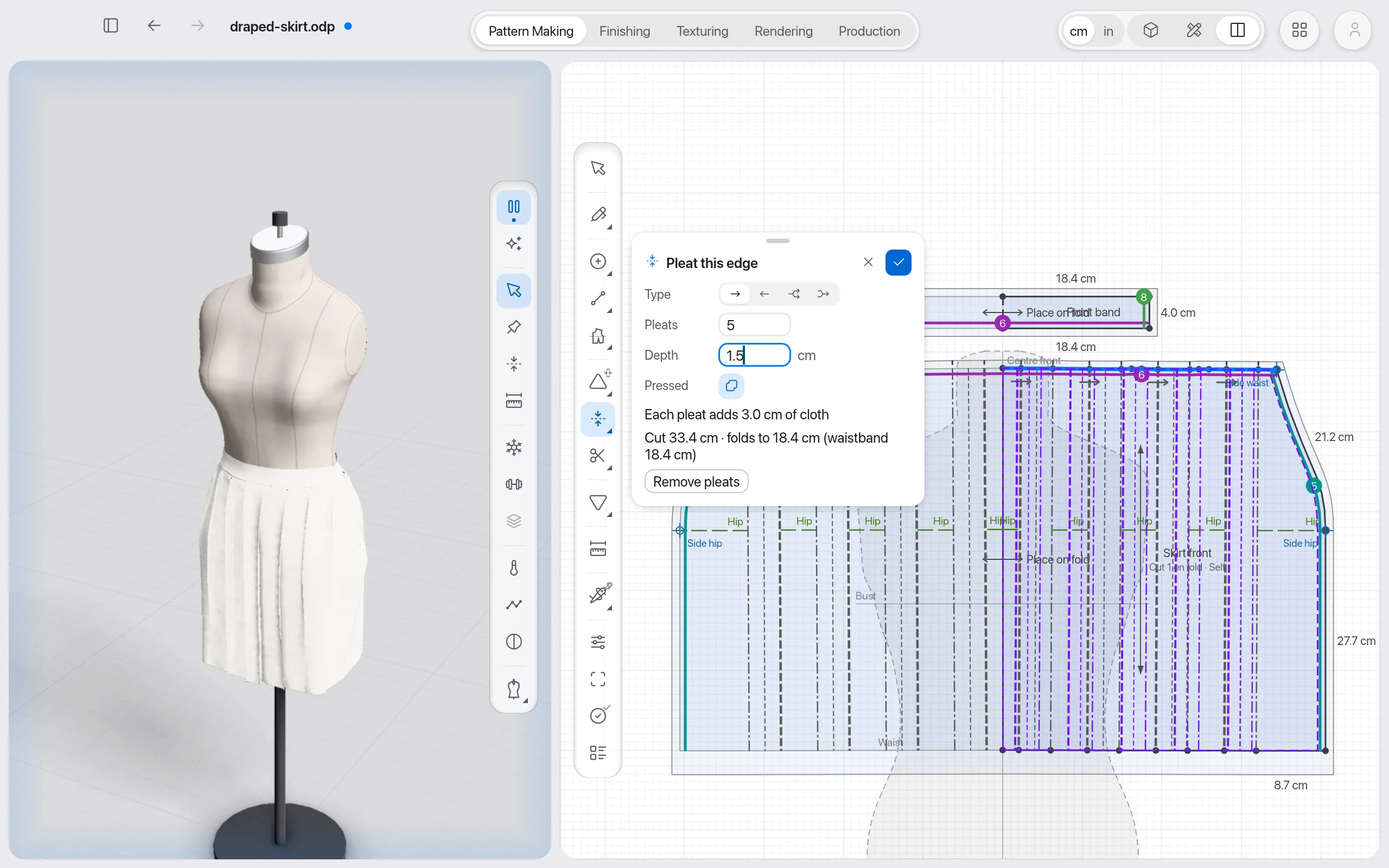
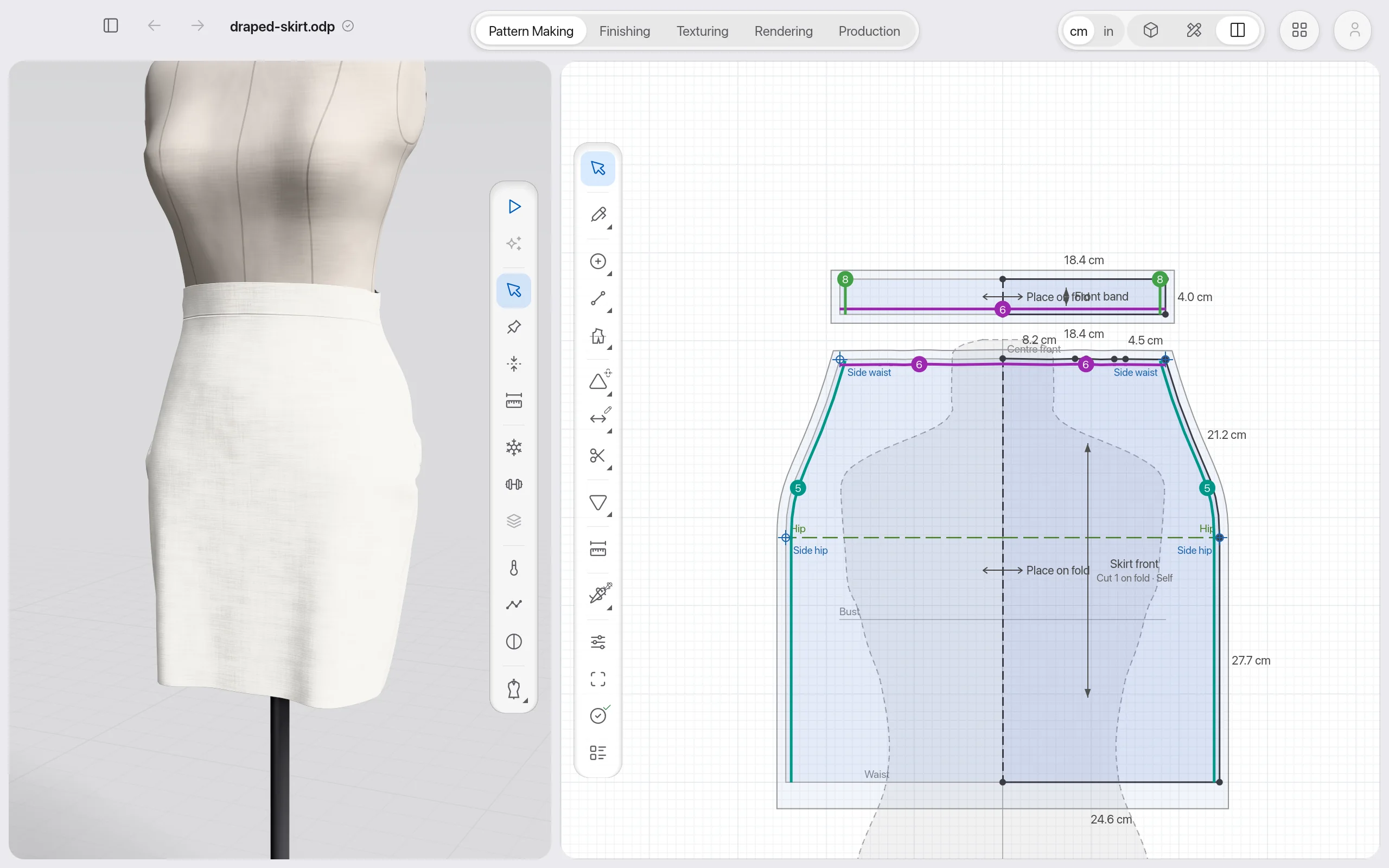
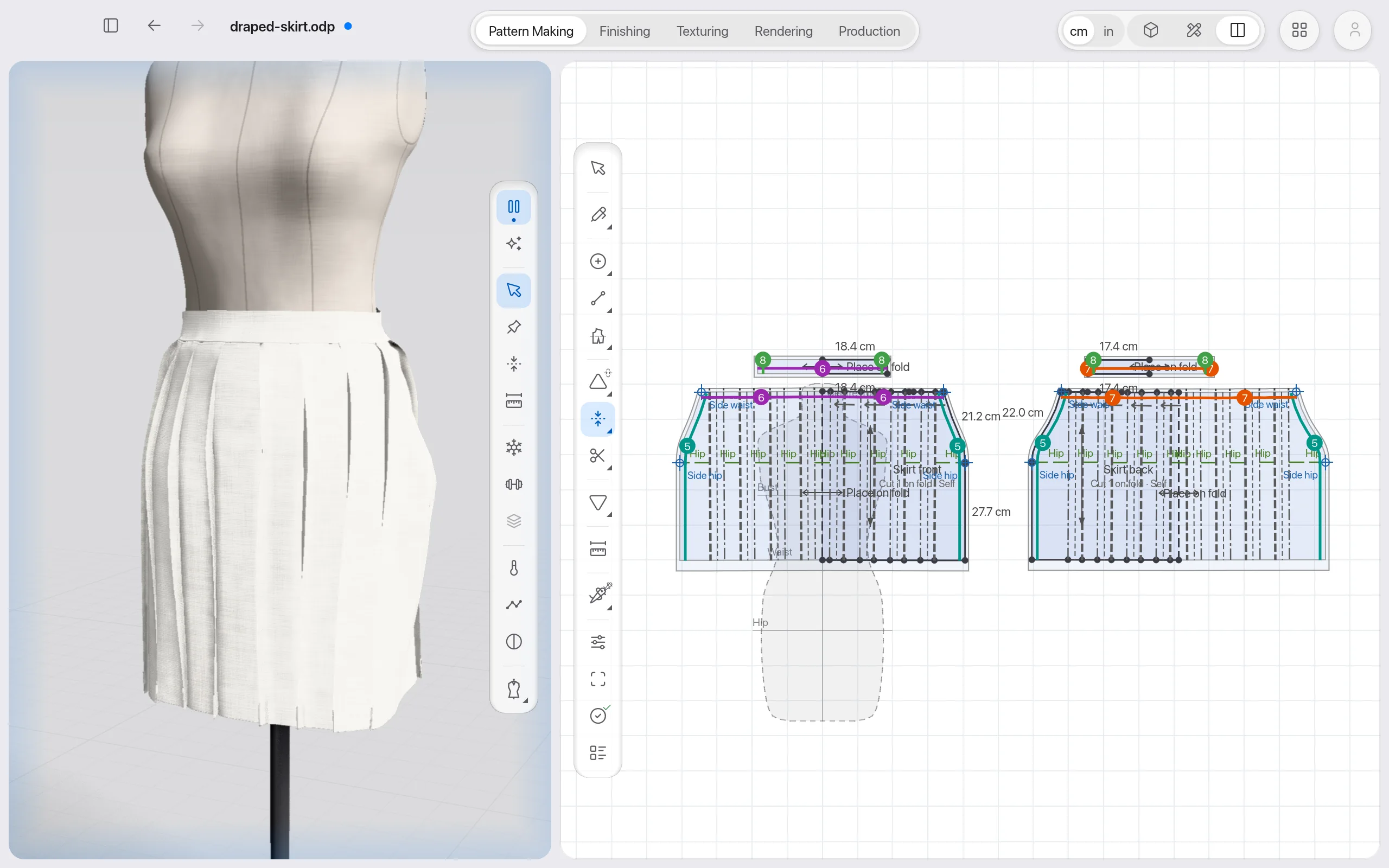
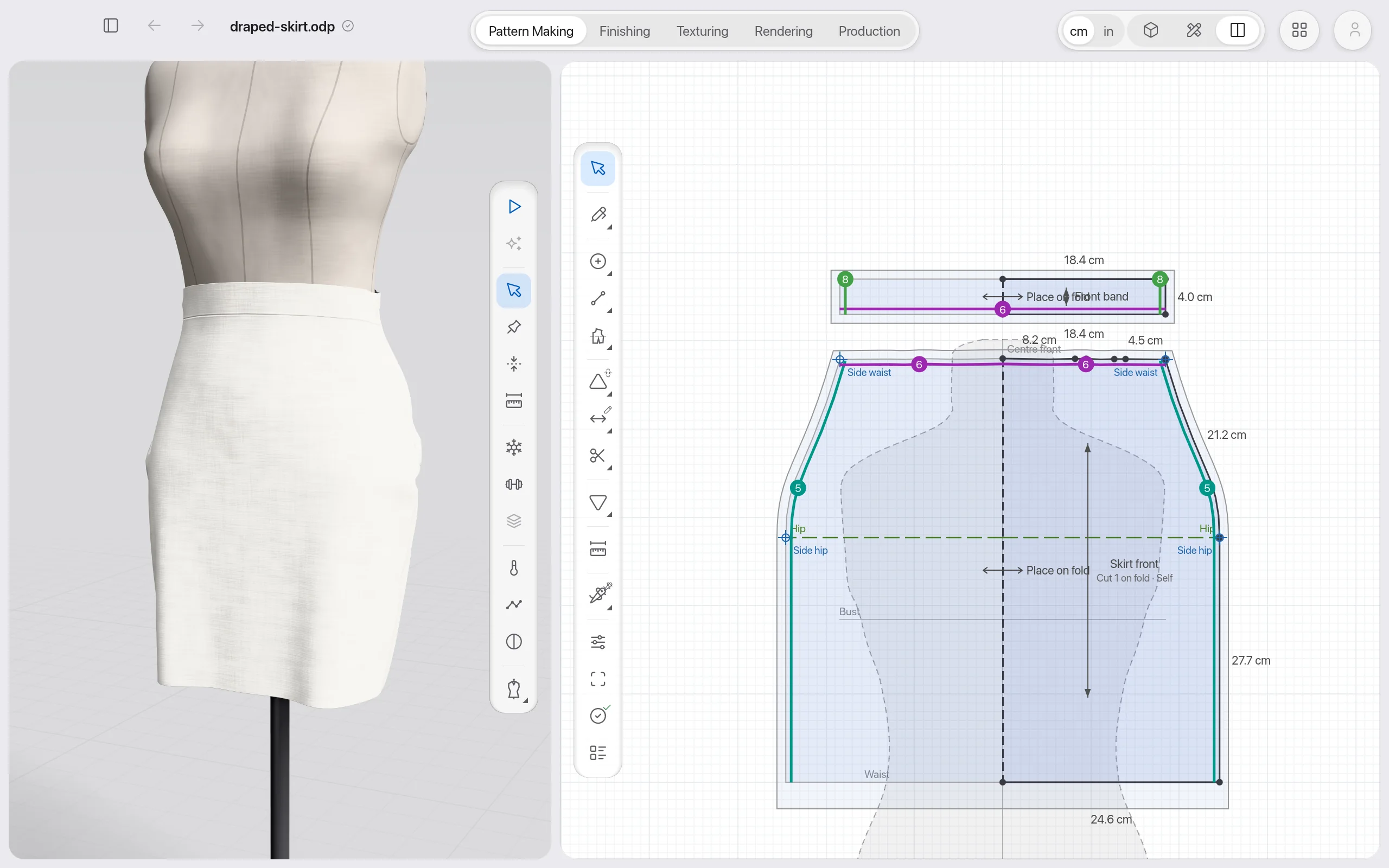
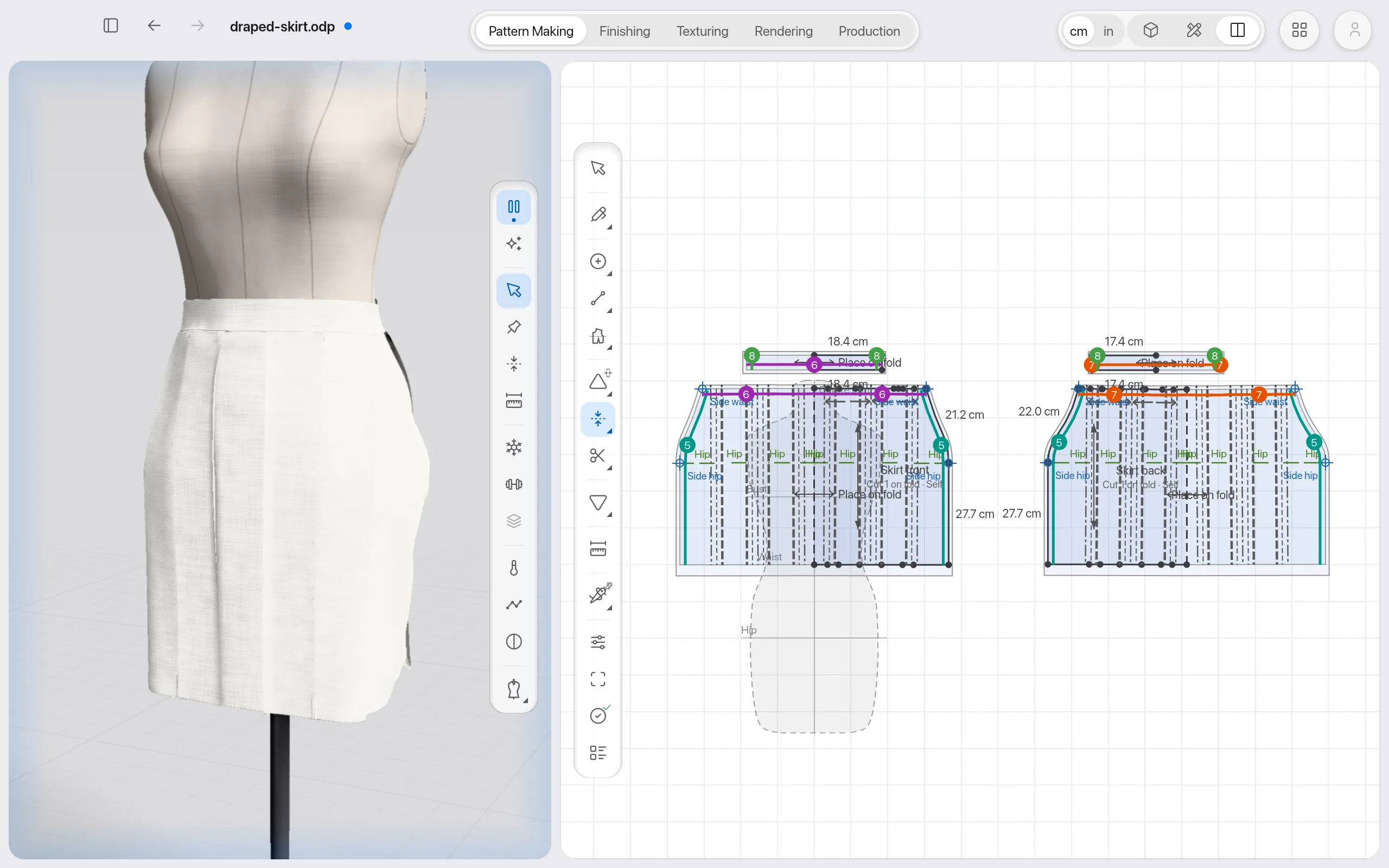
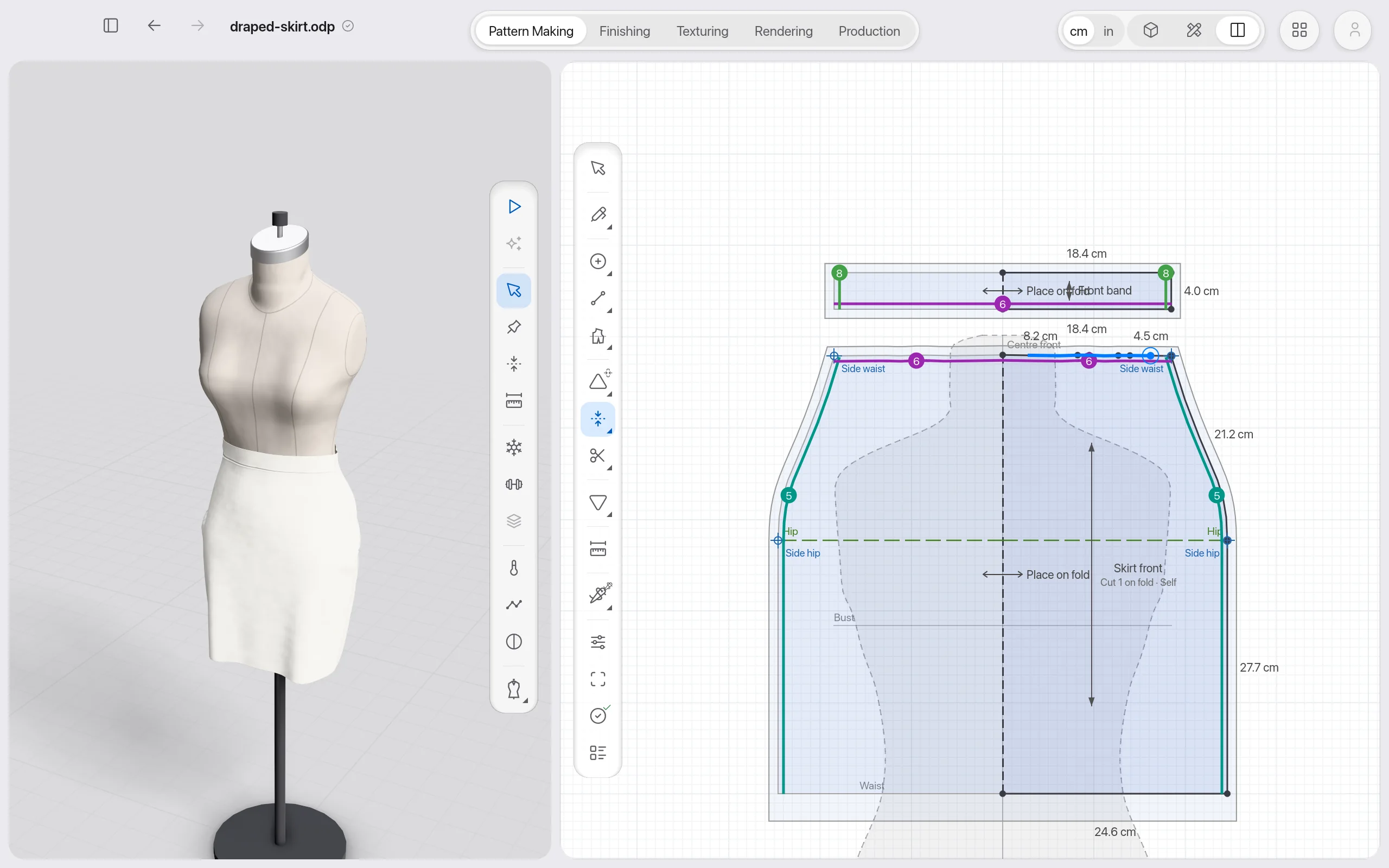
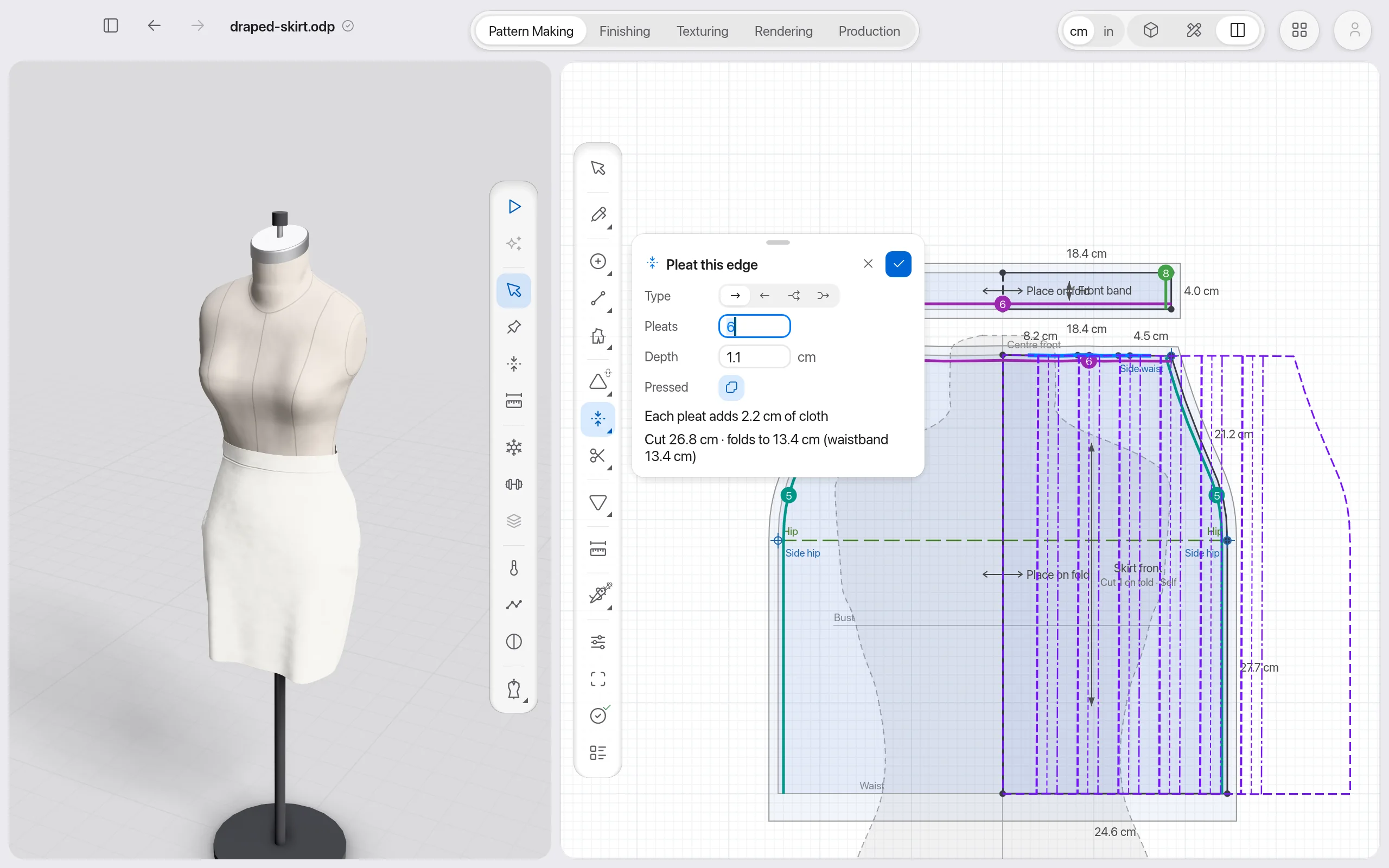
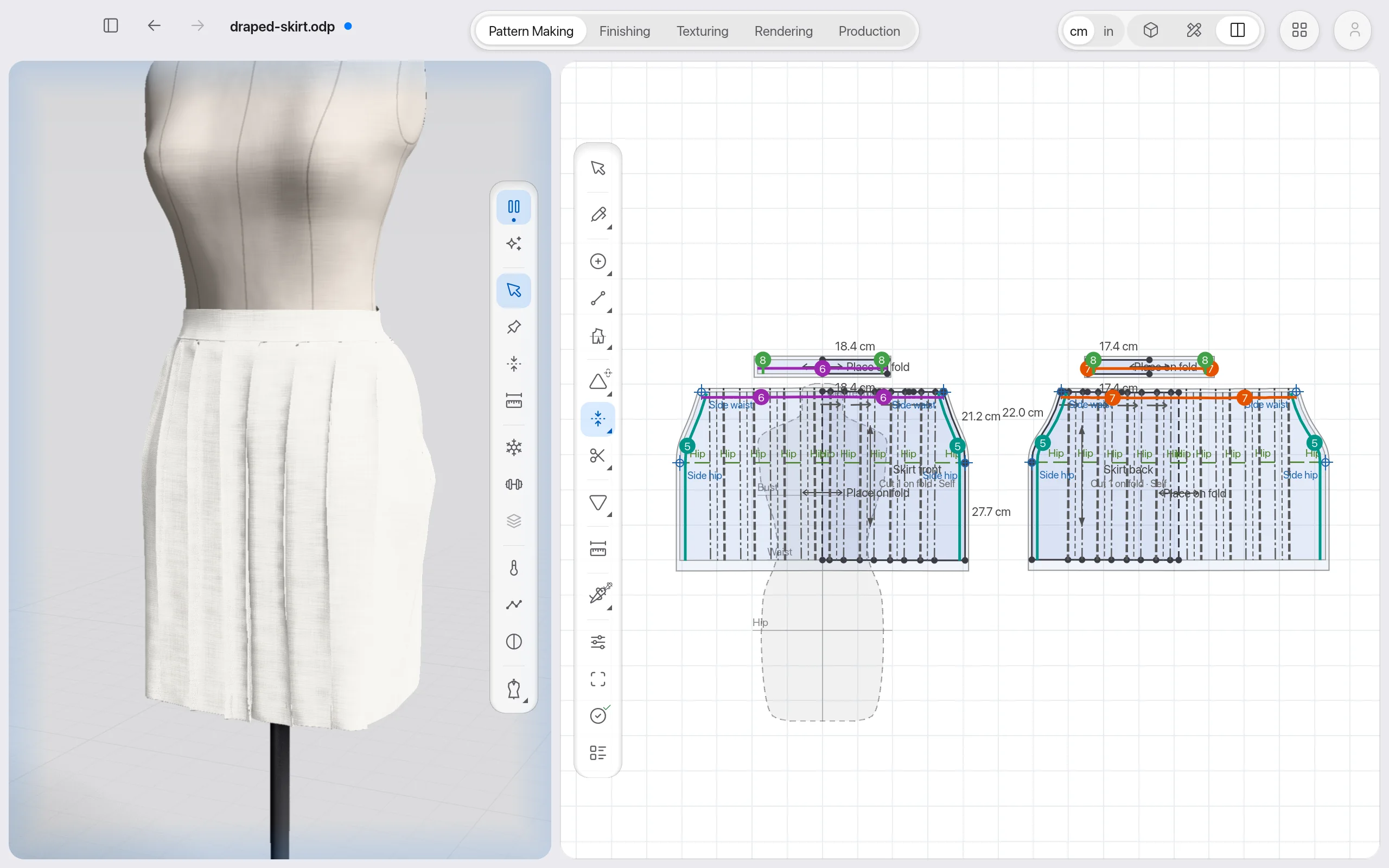
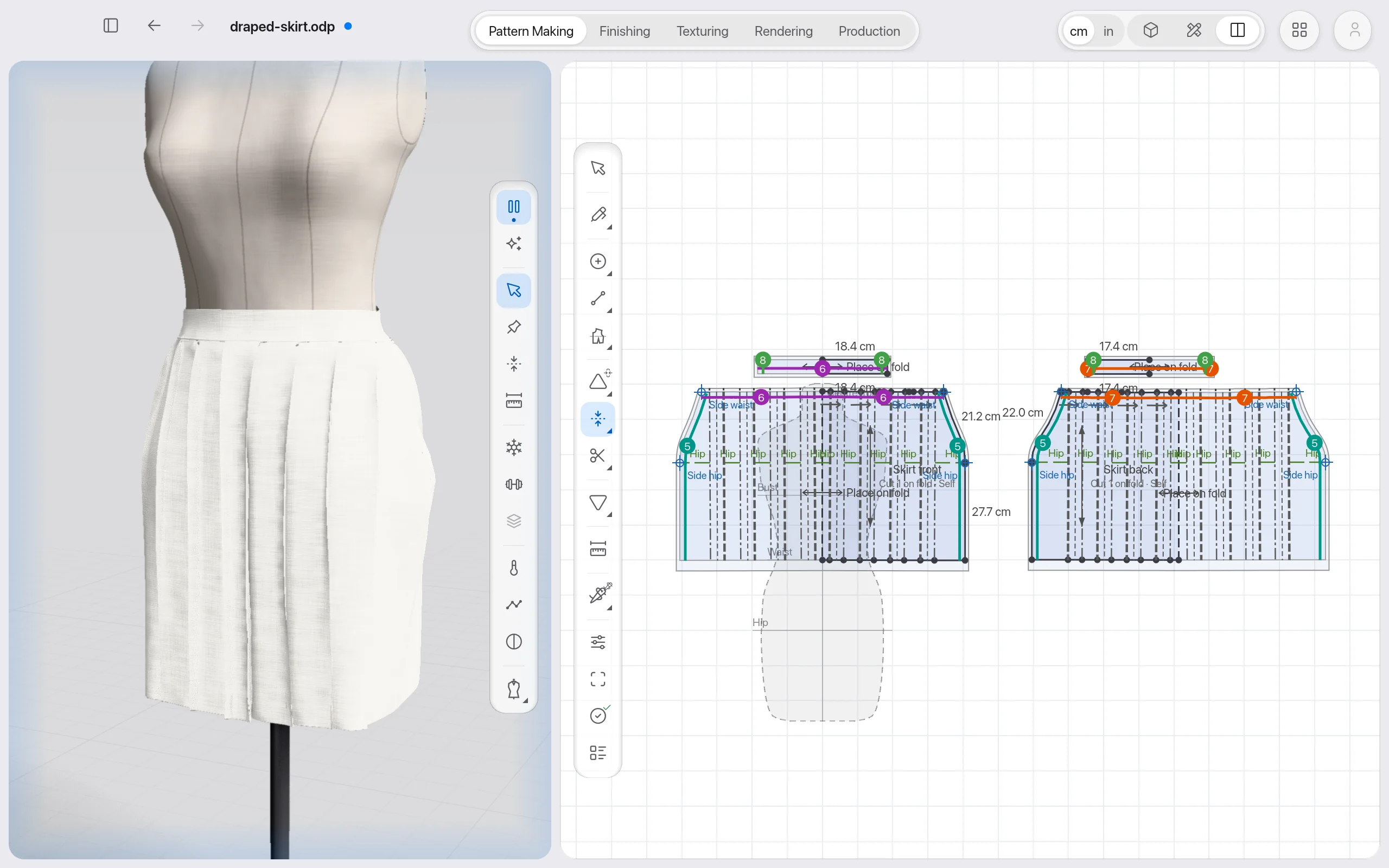
Four knife pleats folding right, pressed, is the way you made. The box has more choices: the kind of pleat, and whether they are pressed.
Knife pleats folding left
It does: The same knife pleats, folded the other way: choose the second Type button. Everything else is as before: 4 pleats, 2 cm deep.
Use it when: When the pleats should turn the other way: to mirror a set on the other side of a garment, or so they fall away from an opening.
Box pleats
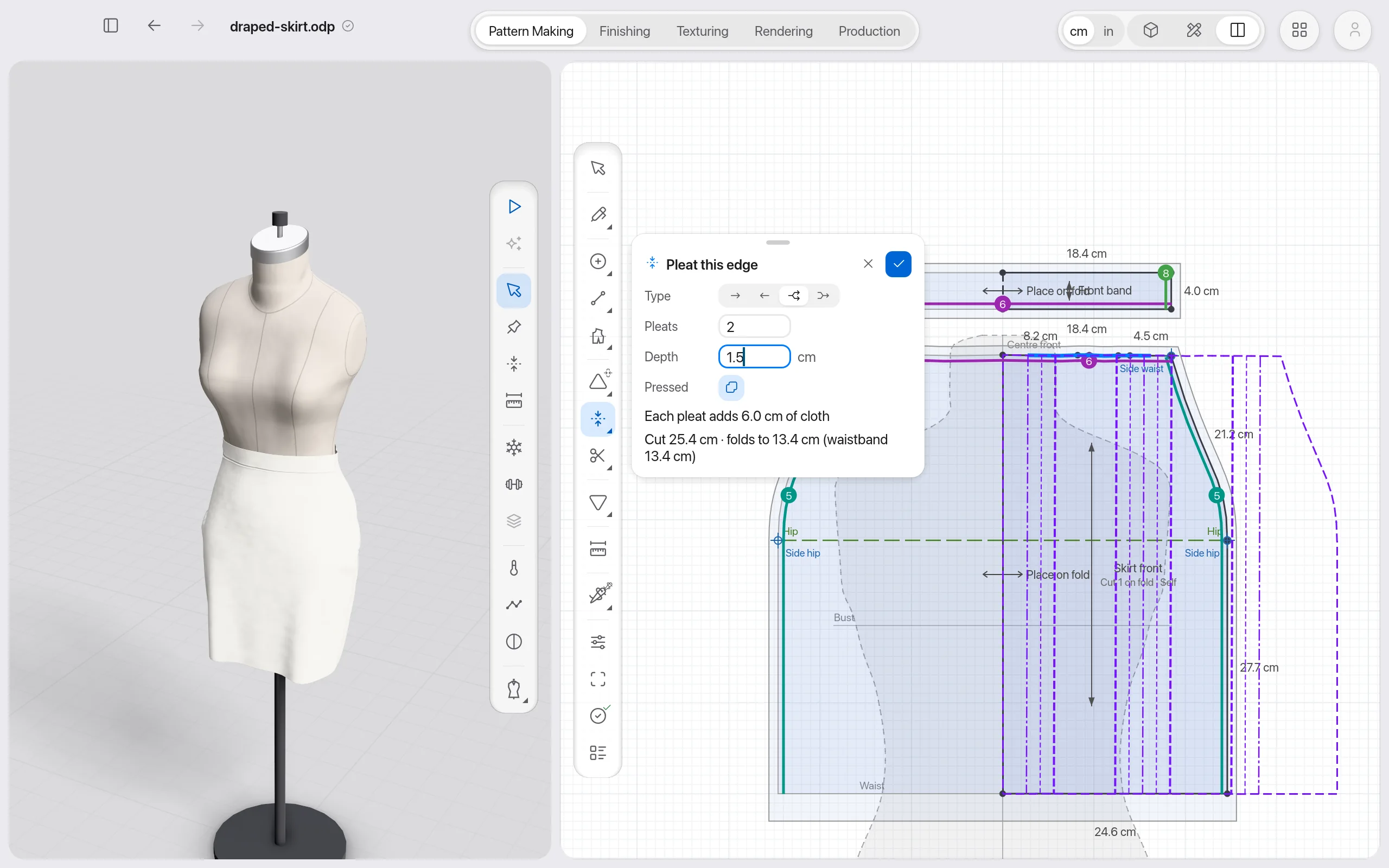
It does: Pairs of folds turned away from each other, leaving a flat panel on top of each pair. Each takes twice the cloth of a knife pleat, and the box needs room at both ends of the stretch: pick part of the waist, not all of it.
Use it when: When you want flat panels with the folds behind, as in a kilt or a box-pleated skirt. Two box pleats 1.5 cm deep fit the middle of this waist.
Show the steps (3)
- Pick part of the waist
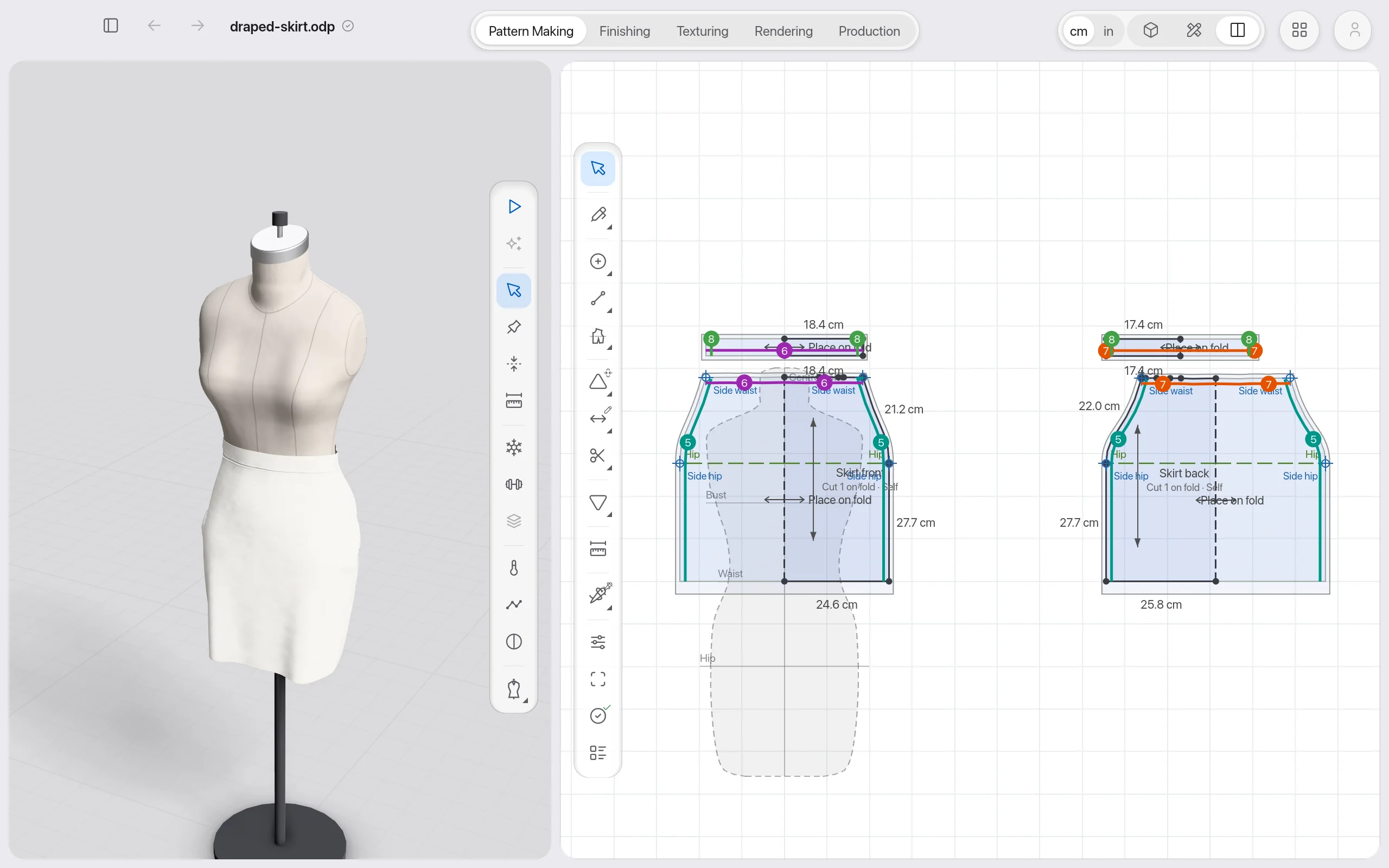
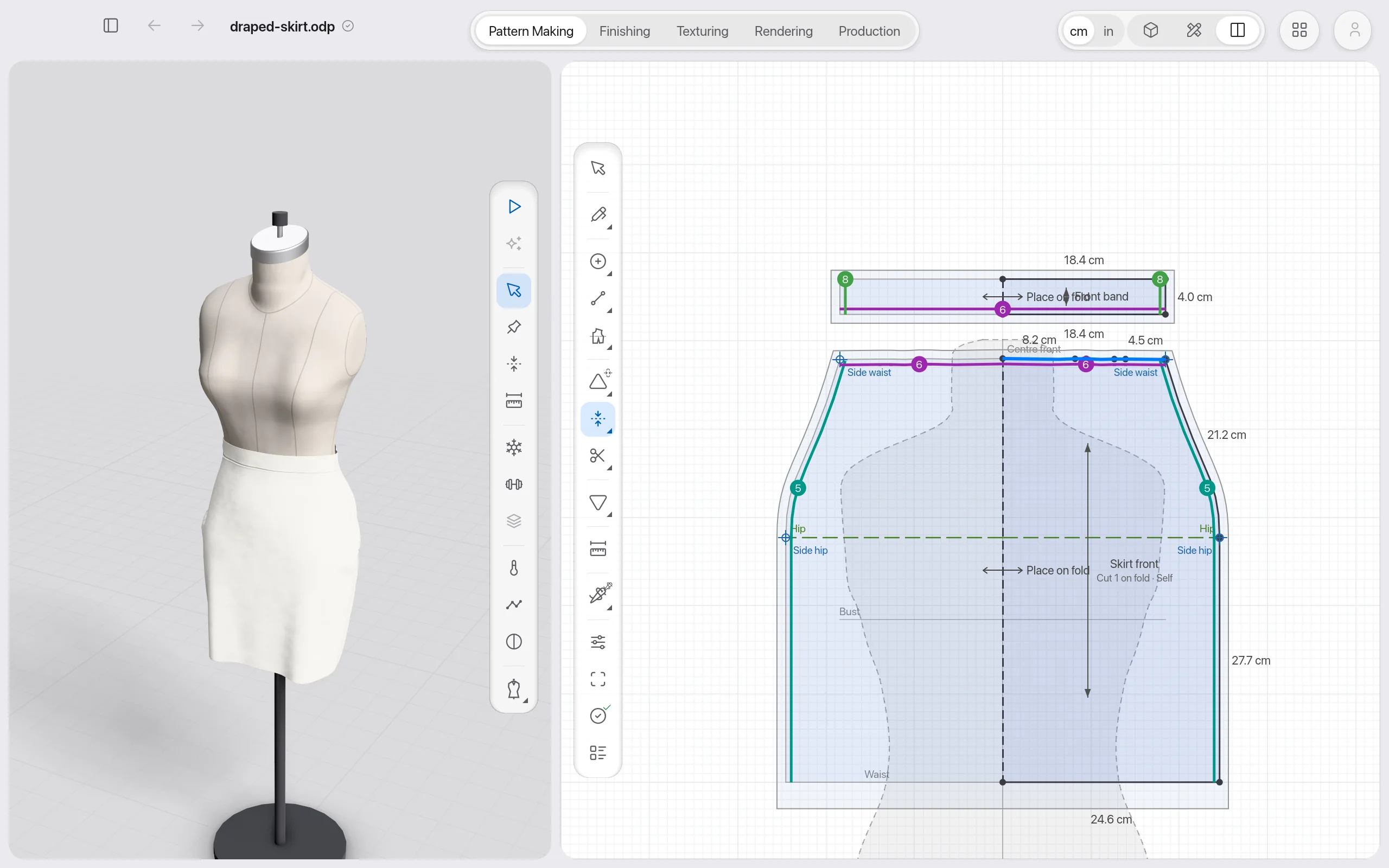
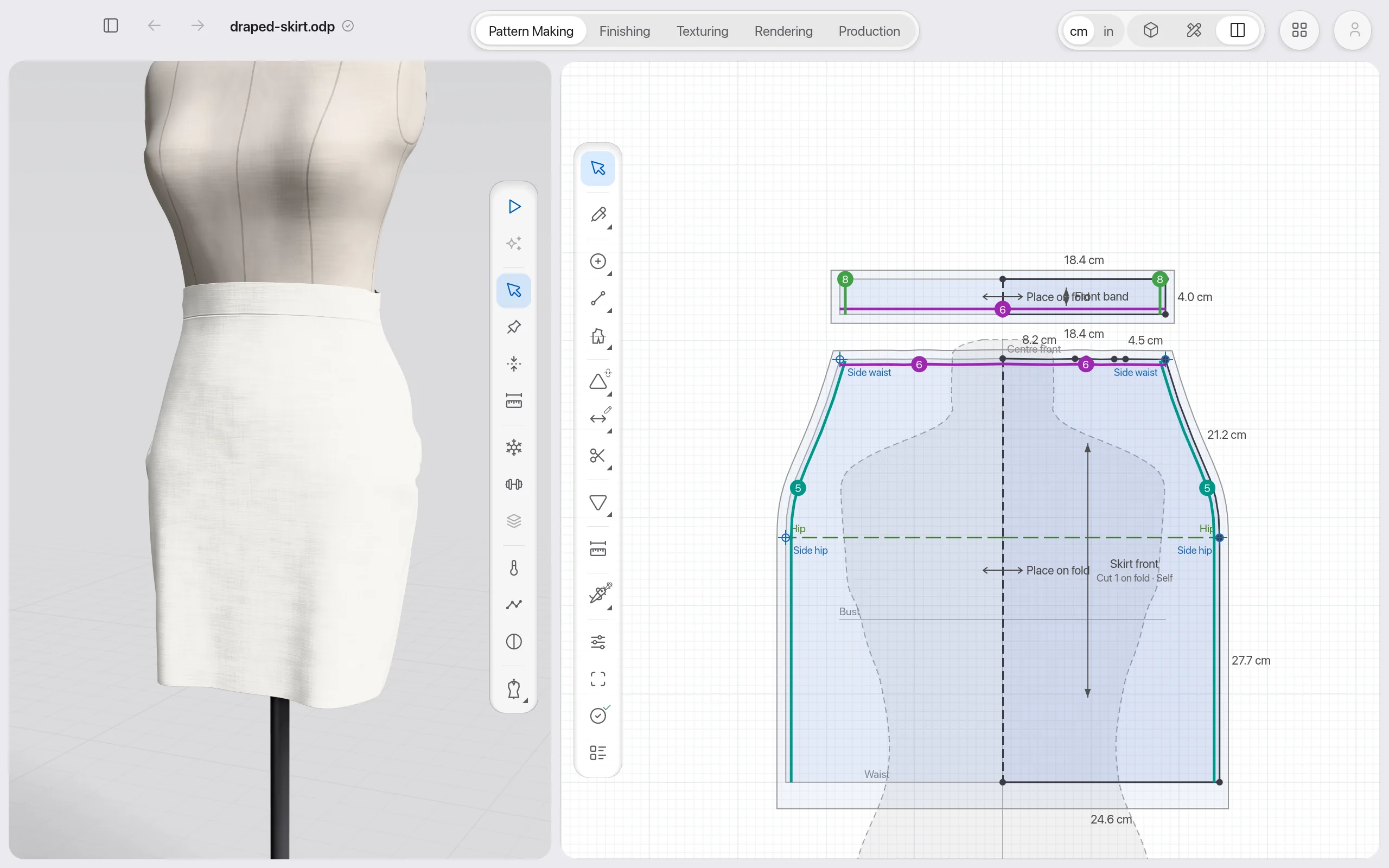
- spot 1 With Pleat in hand, click where the pleats start, a little in from the side seam (the right-hand edge).
- spot 2 Double-click where they end, a little short of the fold (the dashed line in the middle).
WhyA box pleat has a fold on each side of its panel, so the first and the last need room. On the whole waist they would lie outside the piece and the app says: the pleat lines don't stay on the piece there.
- Choose Box pleats
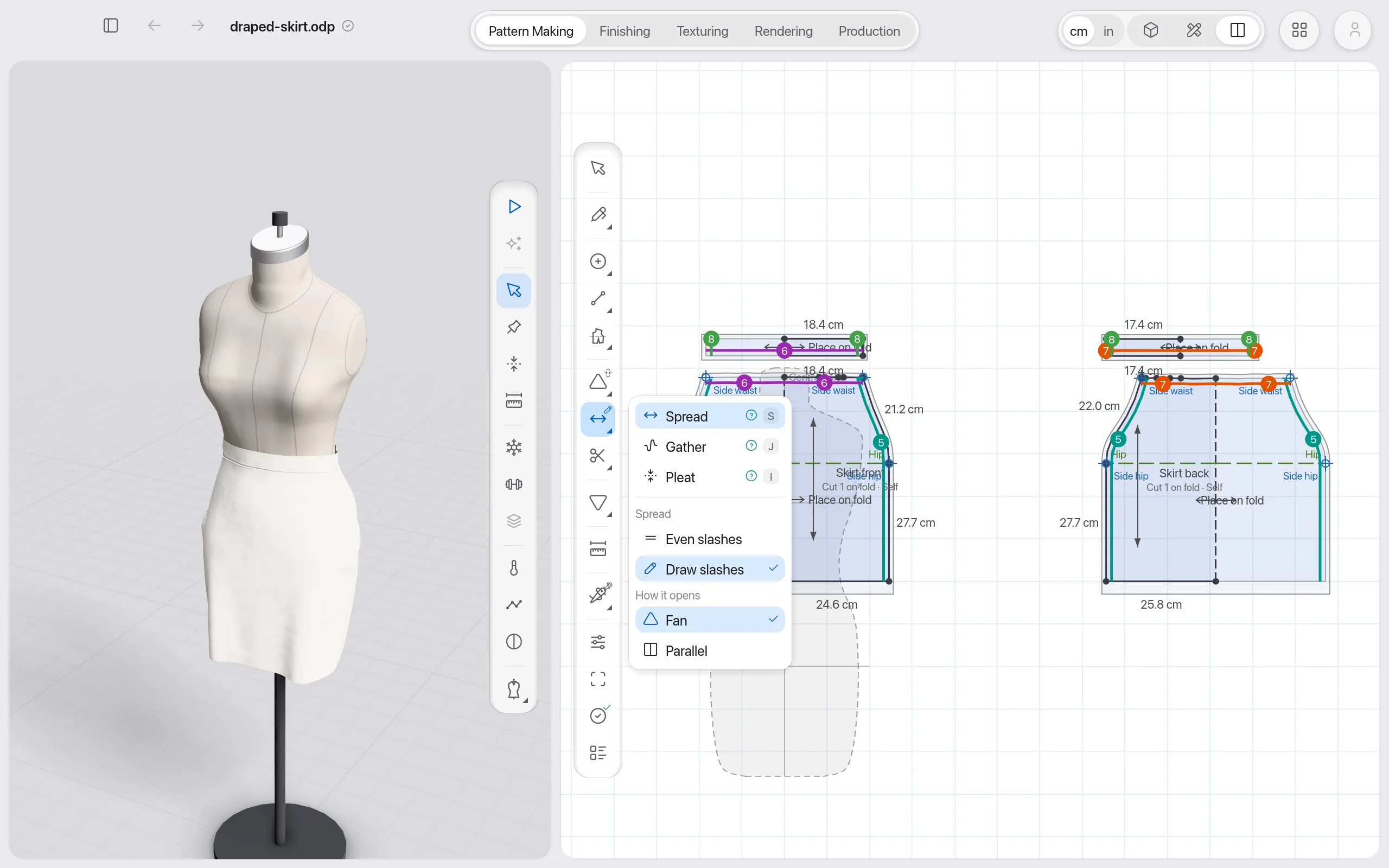
- The box opens. spot 1 Click the third Type button, Box pleats.
WhyThe four Type buttons are knife pleats folding right, knife pleats folding left, box pleats and inverted pleats. Hover one to see its name.
- Type 2 pleats, 1.5 cm deep
- spot 1 Type 2 in Pleats.
- spot 2 Type 1.5 in Depth.
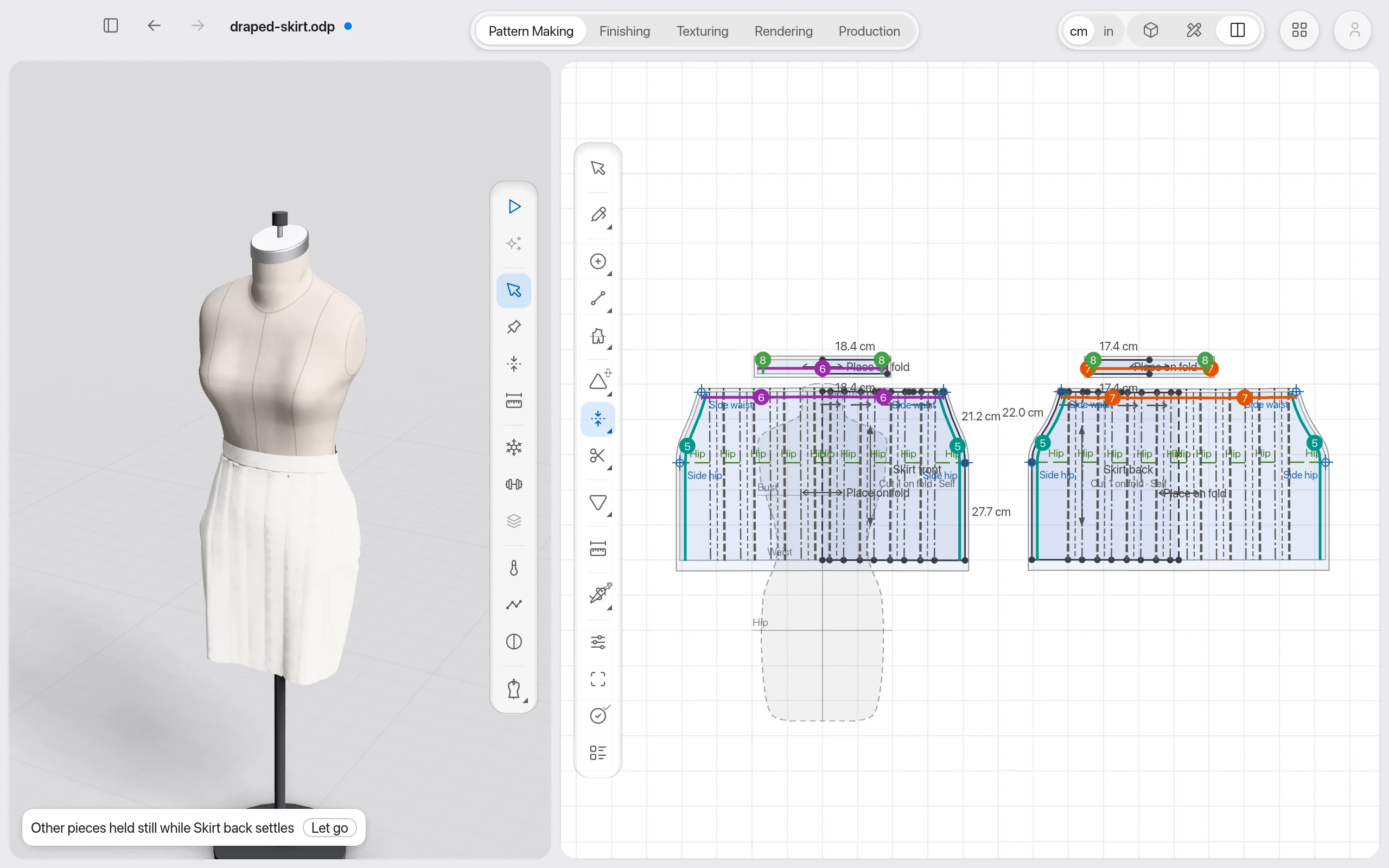
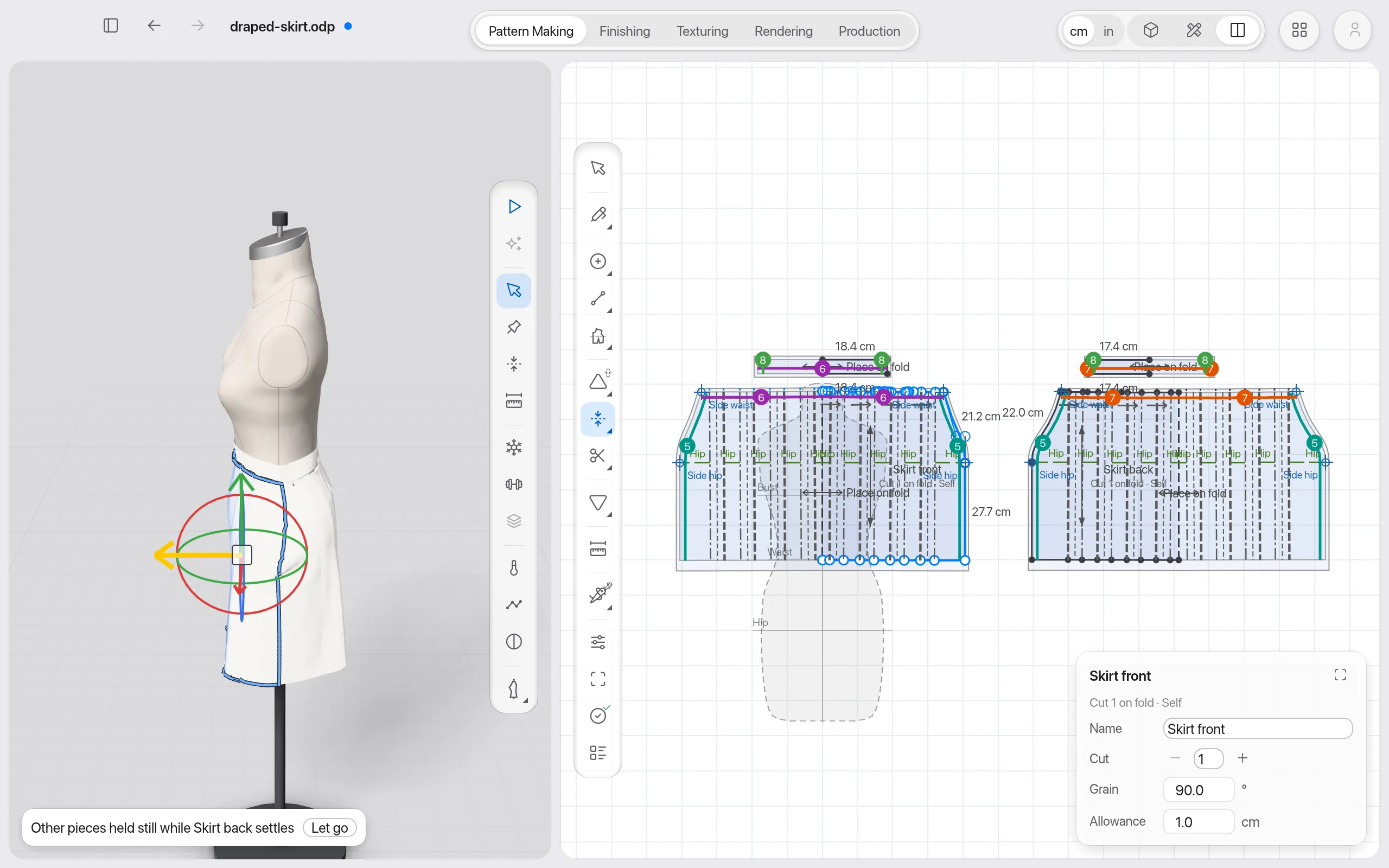
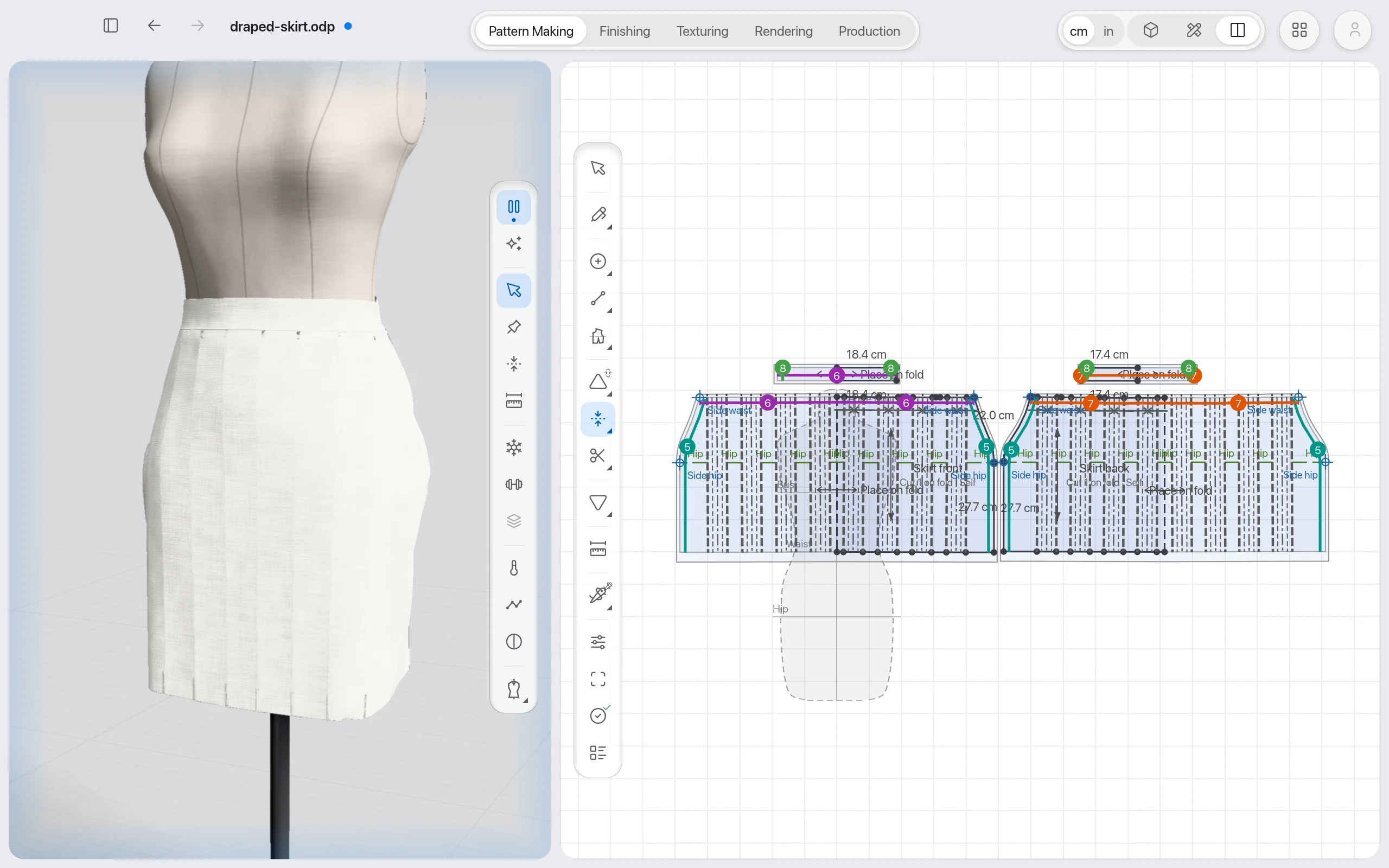
- Press Enter, then do the same on the back skirt.
WhyEach box pleat adds 6.0 cm of cloth, so two hide 12 cm: the stretch you picked is 13.4 cm and is cut 25.4 cm wide. Deeper, or more of them, and the box says so or the pleats stay flat in 3D.
Inverted pleats
It does: Pairs of folds turned toward each other, meeting under the piece, so the face shows a single line where each pair meets. They fit the whole waist: 4 pleats, 1.5 cm deep.
Use it when: When you want a clean line on the face with the fullness behind it, as in the back of a jacket or at the centre of a skirt.
Pressed or soft
It does: Pressed, the default, irons the pleats flat so they stay closed down their whole length in 3D. Turn it off for soft pleats, which open below the hip as unpressed pleats do: click Pressed in the box.
Use it when: Pressed for a crisp pleated skirt in wool or a kilt. Soft for pleats left unpressed in a light fabric. On this skirt the difference is small: look at the folds below the hip, which open a little when soft.